
How to Read a Peptide CoA
A Certificate of Analysis (CoA) is a lab's report on a specific batch: what the compound is, how pure it is, and how it was tested. But a logo and a "99%" line prove nothing on their own. Six things separate a CoA that documents a batch from one that just decorates it — identity, purity plus method, lot traceability, independent testing, net content, and the test date.
Why every peptide CoA needs a complete read
A Certificate of Analysis is meant to be evidence. In practice it is often treated as a badge — a reassuring PDF that gets glanced at and filed.
That gap is where quality problems live. A CoA is a testable claim: it says a named laboratory ran named tests on a named batch and got specific results. Every one of those nouns can be verified — or quietly omitted. Reading one properly takes about a minute and comes down to six checks. Here they are, in the order a chemist runs them.
Identity — is it actually the compound?
Purity is meaningless until the identity is settled — what, exactly, is pure. The first line to find is identity confirmation: evidence that the material is the molecule it claims to be, not merely a highly pure something-else. The standard tool is mass spectrometry, which measures molecular weight — the observed mass should match the compound's theoretical mass.[1] A strong CoA shows the expected versus found mass; a weak one just prints the name at the top and moves on.
Purity — and the method behind it
Now the famous number. Purity is typically reported as the target's share of the total signal on a chromatogram. But the figure is only as good as the validated method that produced it. Resolution depends on the instrument, column, conditions and method suitability—not the acronym alone. The purity line should therefore name its method and, ideally, show the actual chromatogram.
We break this one down in its own article: what UPLC and HPLC purity methods actually show →
Lot & batch — does it match the vial on the bench?
A CoA certifies one batch. Compounds are made in discrete lots, and quality varies lot to lot, so a certificate is only valid for the specific batch it was run on. The lot number on the CoA must match the lot number on the container in hand. A common shortcut is the "representative" CoA — a single flattering certificate reused across every batch sold. That is not traceability; it is a stock photo.
Who ran the test — independent or in-house?
Testing is only as credible as its distance from the seller's interests. A result from an independent, third-party laboratory carries more weight than one generated in-house by the party selling the material — and both carry more than no attribution at all. Look for the testing lab to be named, ideally with the analyst or a report identifier. "Tested" with no one attached is not a result; it is an adjective.
Net content — how much is actually there?
This is the check almost nobody runs, and it is the one that most often surprises people. Purity describes the quality of the material; it says nothing about the quantity. A vial can contain highly pure material and still hold less of it than the label states, because lyophilised (freeze-dried) products also contain moisture and other residues. That is why rigorous certificates report net compound content — the actual mass of the target material — separately from the gross fill weight.
Test date — how recent is the snapshot?
A CoA is a photograph taken at a moment in time. Analytical results describe the batch as it was on the day it was tested — and materials can change afterward, because storage conditions and time affect stability. A certificate with a clear test date shows how current the picture is; an undated one is a snapshot with no timestamp. Recency matters most for materials that have been sitting, and it pairs directly with knowing how the batch was stored since.
Why the date matters: how research compounds degrade in storage →
Five red flags, at a glance
A weak CoA usually gives itself away
- No method named beside the purity figure — just "99%".
- No lot number, or a lot number that doesn't match the vial.
- No testing laboratory named — results with no author.
- No chromatogram or mass-spec trace — conclusions without the evidence.
- No date, or a "representative" certificate reused for every batch.
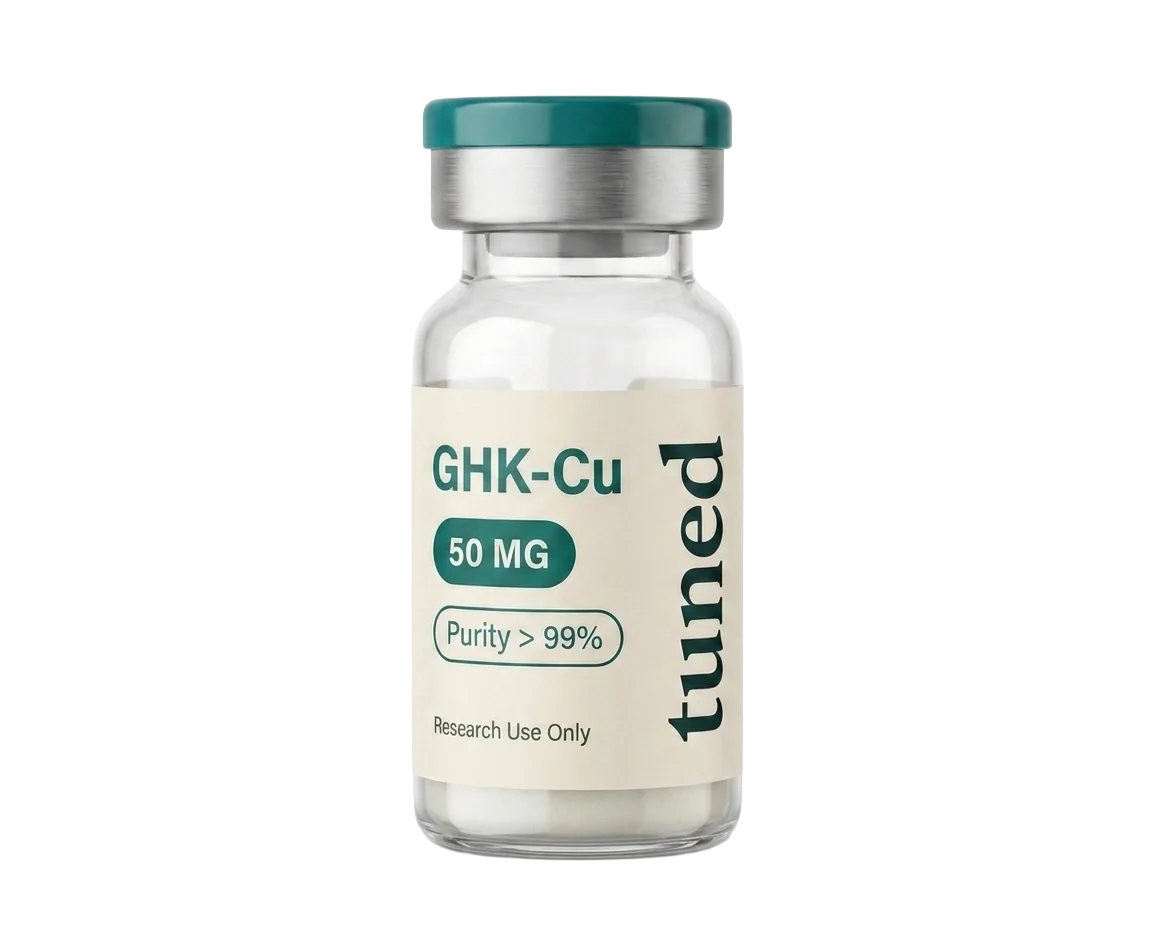
A CoA that passes all six
For laboratory research use only · available to qualified researchers. Not for human or animal consumption.
Read the whole page, not the headline
The purity line is the headline, but a certificate is the whole page. Identity proves it's the right molecule. The method proves the purity number is rigorous. The lot proves it belongs to the vial in hand. The lab proves someone independent stands behind it. Net content proves how much is actually present. The date proves how fresh the picture is. Run those six checks and a CoA stops being a badge and becomes what it was meant to be: evidence.
Go deeper
References
- United States Pharmacopeia, General Chapter <1225> Validation of Compendial Procedures. (Framework for identity, purity and content testing of analytical procedures.)
- United States Pharmacopeia, General Chapter <621> Chromatography. (Standard for chromatographic purity determination and system suitability.)
- ISO/IEC 17025:2017, General requirements for the competence of testing and calibration laboratories. (The basis on which independent testing laboratories are accredited.)
This article describes how to interpret analytical quality-control documentation for research materials.
For research use only. Not for human or animal consumption. This article is provided for educational and laboratory-reference purposes. It describes quality-control documentation and makes no medical claims. tuned products are intended for in-vitro research and laboratory use only.