Glutathione side effects
Oral glutathione is generally well tolerated in trials, with no serious side effects reported.[1] The safety picture changes by route: IV glutathione, especially for skin whitening, has drawn regulatory warnings and reports of serious reactions, and isn’t an approved use.[2] There’s also a real and useful piece of science behind "glutathione and Tylenol" — glutathione is the body’s natural defense against acetaminophen’s toxic byproduct.[3] tuned supplies glutathione for research use only.
What are the side effects of glutathione?
Reported glutathione side effects depend heavily on the route. Oral glutathione is generally well tolerated; the serious concerns are tied to unapproved IV use.[1][2]
In controlled oral trials, glutathione produced no serious adverse effects.[1] Because it's a molecule the body makes and uses constantly, the effects that come up are mostly mild or route-related:
| Reported effect | Context |
|---|---|
| Generally well tolerated (oral) | No serious adverse effects in oral trials[1] |
| Injection-site reactions | Redness or soreness with shots — common to any injection |
| Serious reactions (IV, skin-whitening) | Severe skin reactions, kidney/thyroid effects reported; regulators warn against it[2] |
Glutathione injection side effects
The gap between "well tolerated" and "warned-against" is entirely about how glutathione is given. Oral and topical use sit at the low-risk end; high-dose unapproved IV use — mostly for cosmetic skin lightening — is where the documented serious harms cluster.[2]
It's a useful reframe: glutathione the molecule isn't the problem — it's something the body makes and tolerates well. The risk is introduced by how it's delivered (large, rapid, unapproved IV doses) and by what's in the vial (compounded, sometimes contaminated material). That's why the safety story is really a route-and-source story, and why oral use looks so different from cosmetic IV.
What to avoid when taking glutathione
There's no well-established list of foods or supplements you must avoid with glutathione — so the honest answer focuses on the real cautions rather than inventing a list.[1]
The genuine things to be careful about are about route and source, not interactions:
- Avoid unapproved IV glutathione for skin whitening. This is the use regulators warn against, with documented serious reactions.[2]
- Avoid unverified material. For any injectable, contamination or wrong potency is the realistic hazard — a batch Certificate of Analysis addresses it.
- Be aware of the acetaminophen relationship (below) — not because glutathione is dangerous with it, but because the science is often misunderstood.
Claims that you must avoid specific foods, vitamins or "detox" triggers with glutathione are generally not supported by evidence; treat them as unverified.
What happens when you stop taking glutathione
Stopping is itself low-risk: there's no documented withdrawal effect. What the evidence shows is simply reversal — in a controlled trial, the rise in body stores from oral glutathione returned toward baseline after people stopped.[1] So "what happens when you stop taking glutathione" is that levels gradually revert to where they were, not that anything harmful occurs.
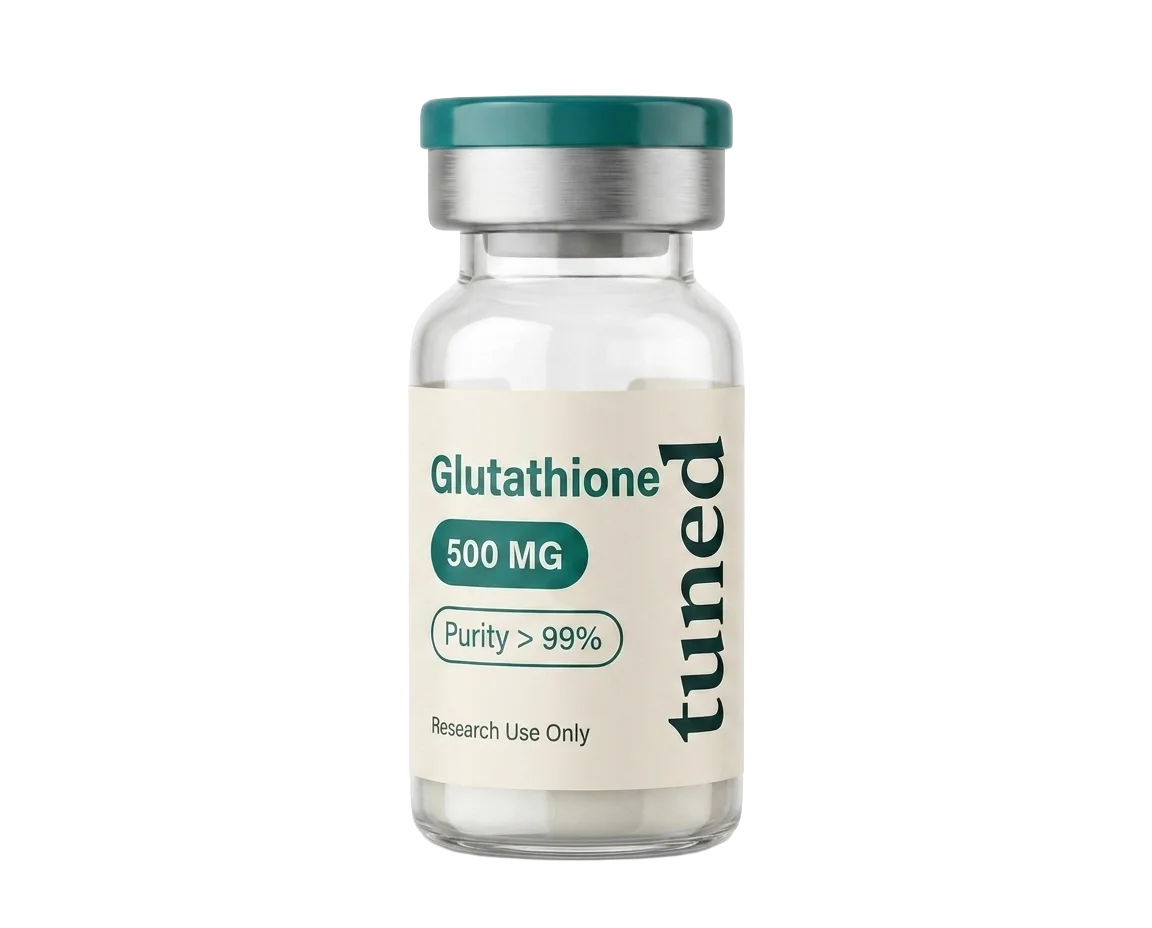
tuned Glutathione
For laboratory research use only · available to researchers. Specifications, pricing & Certificate of Analysis on the product page.
Is glutathione safe (IV & injection)?
For oral use, glutathione looks low-risk — well tolerated in trials with no serious adverse effects.[1] For IV and injection, the answer is more guarded: these routes aren't FDA-approved, long-term safety isn't established in large trials, and IV glutathione for skin whitening specifically has caused serious reactions and drawn regulatory warnings.[2]
Are glutathione injections safe?
So "is glutathione safe?" splits by route: reassuring for oral, unproven-and-warned for cosmetic IV. The realistic risks for injectables are the documented serious reactions with unapproved IV skin-whitening, plus material quality — both reasons the cosmetic IV route is the one to be most cautious about. None of this makes oral glutathione risky by association — it's specifically the unapproved high-dose IV cosmetic use that the safety literature flags.
Glutathione and Tylenol (acetaminophen)
"Glutathione and Tylenol" is a common search, and the science behind it is genuinely important. When the body processes acetaminophen (Tylenol/paracetamol), a small amount is turned into a toxic byproduct called NAPQI — and glutathione is what neutralises it. In an overdose, acetaminophen depletes the liver's glutathione, and once it's gone, NAPQI damages liver cells.[3]
Glutathione and acetaminophen: the key point
This is exactly why the antidote for acetaminophen poisoning, N-acetylcysteine (NAC), works — it replenishes glutathione. So glutathione's protective role here is real and well established.[3] The important caveat: this does not mean taking glutathione is a license to use more acetaminophen, or a substitute for medical treatment of an overdose, which is an emergency. The takeaway is mechanistic understanding, not a self-treatment protocol — and acetaminophen overdose is a medical emergency treated with NAC under supervision, not something to manage with a glutathione supplement. Not medical advice.
Common questions
What are the side effects of glutathione?
What should you avoid when taking glutathione?
Is glutathione safe?
Can you take glutathione with Tylenol?
What happens when you stop taking glutathione?
References
- Richie JP Jr, Nichenametla S, Neidig W, et al. Randomized controlled trial of oral glutathione supplementation on body stores of glutathione. European Journal of Nutrition, 2015;54(2):251–263. PMID 24791752.
- Sonthalia S, Jha AK, Lallas A, et al. Glutathione for skin lightening: a regnant myth or evidence-based verity? Dermatology Practical & Conceptual, 2018;8(1):15–21. PMID 29445569.
- Mitchell JR, Jollow DJ, Potter WZ, et al. Acetaminophen-induced hepatic necrosis. IV. Protective role of glutathione. Journal of Pharmacology and Experimental Therapeutics, 1973;187(1):211–217. PMID 4746329.
Oral glutathione was well tolerated with no serious adverse effects in trials [1]; IV glutathione for skin whitening is unapproved and linked to serious reactions and regulatory warnings [2]. The acetaminophen relationship (glutathione neutralises NAPQI; depletion causes liver injury) is established science [3]; it is not a basis for self-treatment. Not medical advice.
For research use only. Not for human consumption. This page summarises published research for educational purposes. It is not medical advice and is not intended to diagnose, treat, cure, or prevent any disease.