What is glutathione?
Glutathione (GSH) is the body's master antioxidant — the most abundant antioxidant inside our cells. It's a tripeptide (so yes, it is a peptide), made of three amino acids, and it does two big jobs: neutralising damaging free radicals and helping the liver detoxify.[1] Levels fall with age and oxidative stress,[4] which is why it's researched as injections, IV drips, oral supplements and topicals.
What is glutathione, exactly?
Glutathione, often written GSH, is a small molecule the body makes itself and keeps in every cell. It's described as the "master antioxidant" because it's the most abundant antioxidant inside our cells and central to how they defend themselves.[1][2]
It's built from three amino acids — glutamate, cysteine and glycine — joined into a chain, which makes it a tripeptide. The active part is the cysteine, whose sulfur-containing "thiol" group (-SH) is the chemical handle that lets glutathione grab and neutralise reactive molecules.[1]
Because it's something the body produces and depends on constantly, glutathione isn't exotic — it's foundational biochemistry. What makes it interesting for research is that its levels aren't fixed: they drop with age, illness and oxidative stress,[4] which raises the question of whether topping it back up is useful — the thread running through everything below.
Is glutathione a peptide?
Yes — glutathione is a peptide. Specifically it's a tripeptide, a chain of three amino acids (glutamate-cysteine-glycine).[1]
So "glutathione peptide" is accurate, unlike some compounds it's grouped with. There's one neat technical wrinkle: glutathione is joined by an unusual gamma (γ) peptide bond between the glutamate and cysteine, rather than the standard bond most peptides use. That γ-bond makes it resistant to the ordinary peptide-digesting enzymes, which is part of why the body can maintain it inside cells.[1]
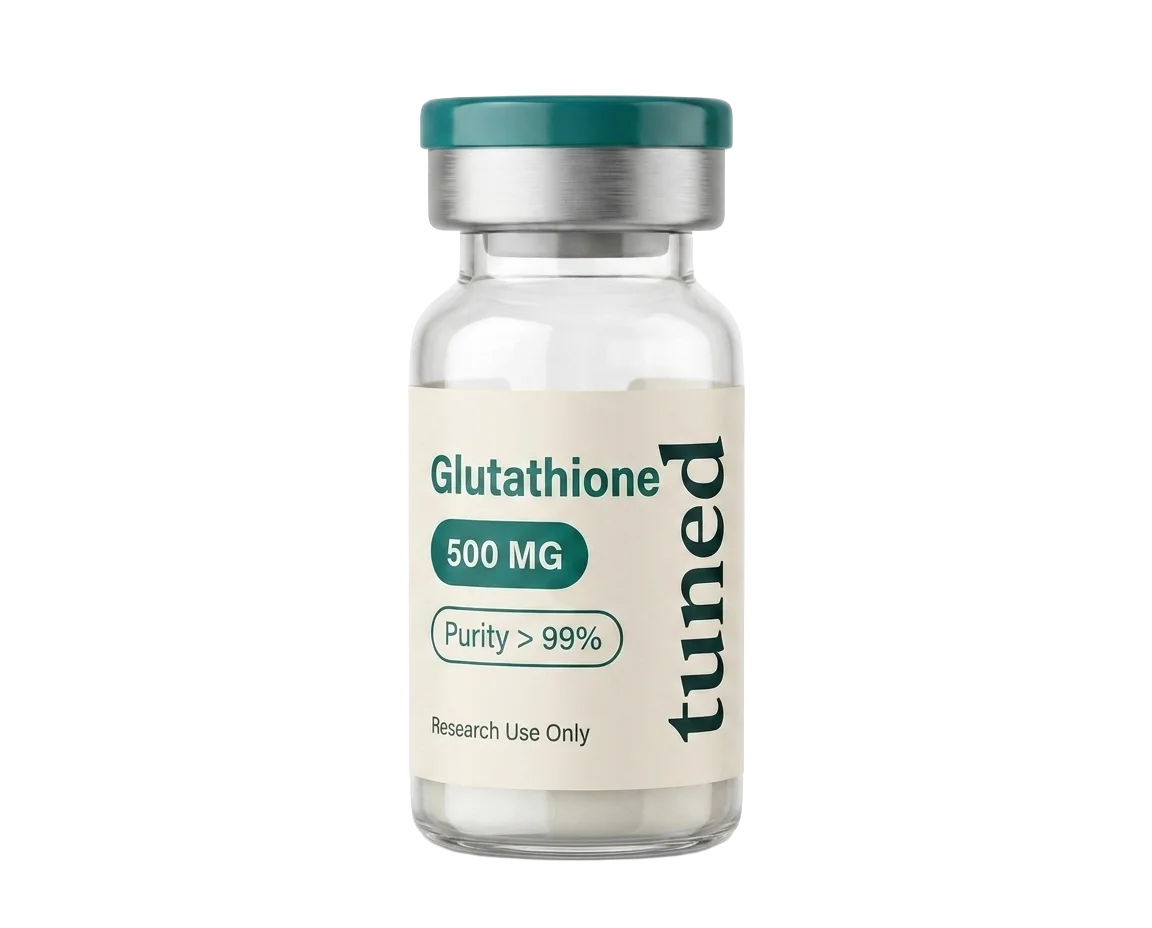
tuned Glutathione
For laboratory research use only · available to researchers. Specifications, pricing & Certificate of Analysis on the product page.
What does glutathione do?
Glutathione has a few overlapping jobs, but they come back to one theme: protecting cells from chemical damage. Researchers describe three main roles:[2][3]
- Antioxidant defense. It neutralises reactive oxygen species (free radicals) before they damage DNA, proteins and cell membranes — and it regenerates other antioxidants like vitamins C and E.[1]
- Detoxification. In the liver, glutathione latches onto toxins, drugs and pollutants (a step called conjugation) so the body can safely clear them.[3]
- Immune & cellular support. It helps immune cells function and keeps the cell's internal chemistry balanced.[2]
What glutathione does for detox & skin
Two of its most-searched uses follow directly from those roles: the liver-detox interest comes from the conjugation job, and the skin interest comes from its antioxidant action plus a specific effect on pigment-making enzymes.[3] Both are covered in depth on the dedicated guides, with the evidence kept honest.
How does glutathione work?
Glutathione works through its cysteine thiol group, which readily gives up an electron to neutralise a reactive molecule. In doing so, two glutathione molecules join together — the antioxidant gets "used up," switching from its active reduced form (GSH) to an oxidized form (GSSG).[1]
The GSH and GSSG cycle
The clever part is that this isn't one-way. An enzyme called glutathione peroxidase uses GSH to break down peroxides, producing GSSG; another enzyme, glutathione reductase (with help from NADPH), converts GSSG back to active GSH so it can work again.[1] The balance between GSH and GSSG is one of the body's main measures of oxidative stress — lots of GSSG means the cell is under pressure.
Detox: the conjugation step
For detoxification, glutathione works differently: enzymes called glutathione S-transferases attach it to a toxin, tagging that toxin for safe removal through the liver and kidneys.[3] This is the same machinery the body uses to handle certain drugs — including, importantly, acetaminophen, which is why glutathione and Tylenol come up together (covered in the side-effects guide).
What ties these jobs together is efficiency: glutathione isn't consumed once and discarded. The recycling system (peroxidase using it, reductase regenerating it) lets a finite pool do enormous work, which is why the capacity of that system — not just the raw amount of glutathione — is what determines how well a cell copes with stress.[1] When demand outstrips recycling, the pool tips toward the oxidized GSSG form, and that imbalance is the hallmark of oxidative stress.
Glutathione deficiency & low glutathione symptoms
Glutathione levels aren't constant — they decline with age and fall under oxidative stress. A human study from Rajagopal Sekhar's group found older adults had markedly lower glutathione, and that supplying the building blocks (cysteine and glycine) restored it.[4] Low glutathione is also associated with a range of chronic and oxidative-stress conditions.[6]
What "low glutathione symptoms" really means
It's worth being precise here, because "low glutathione symptoms" is a common search with a fuzzy answer. Glutathione deficiency isn't a standalone diagnosis with a tidy symptom checklist — it's a biochemical state, measured in blood or cells, that tends to accompany aging, illness and high oxidative stress rather than causing a specific set of symptoms on its own.[6] So the honest framing is that low glutathione is a marker associated with those states, not a condition you'd self-diagnose from symptoms.
Glutathione benefits
The reported glutathione benefits flow from its antioxidant and detox roles: protection from oxidative stress, support for liver detoxification, immune support, and — its single most-searched use — effects on skin tone.[1][3] The evidence is strongest for raising the body's glutathione stores (shown for oral supplementation)[5] and is more modest and mixed for specific outcomes. We keep clinical findings and marketing claims clearly separated on the benefits guide.
Full glutathione benefits guide — antioxidant, detox & skin →
Glutathione side effects
Oral glutathione is generally well tolerated in studies.[5] The safety picture is different by route: IV glutathione, especially when used for skin whitening, has drawn regulatory safety warnings and reports of serious reactions, and isn't an approved use.[6] There's also a genuine interaction worth knowing — the relationship between glutathione and acetaminophen (Tylenol) — which the side-effects guide explains.
Full glutathione side effects guide — what to avoid, IV safety & Tylenol →
Glutathione forms and is it FDA approved?
Glutathione is researched in many forms: reduced (L-glutathione, the active form), liposomal and S-acetyl versions (designed for better oral absorption), plus topical, sublingual, injectable and IV. On approval: oral glutathione is sold as a dietary supplement; IV glutathione is not FDA-approved as a skin or wellness treatment, and in the US injectable glutathione exists only via pharmacy compounding, not as an approved finished drug.
Reduced vs L-glutathione, and how to choose
"Reduced glutathione" and "L-glutathione" refer to the same active form (the reduced GSH the body uses); marketing sometimes splits them, but chemically they're the same thing. For any research-grade material, the variable that matters most is purity — a batch-specific Certificate of Analysis (UPLC purity, identity, endotoxin) does more for quality than any label term. See the forms guide for how liposomal and S-acetyl compare.
Common questions
Is glutathione a peptide?
What does glutathione do?
What is the difference between GSH and GSSG?
What are the symptoms of low glutathione?
Is glutathione FDA approved?
Glutathione injections, IV, skin & more
This page is the overview. For the specifics, these guides go deeper:
Related research peptide guides
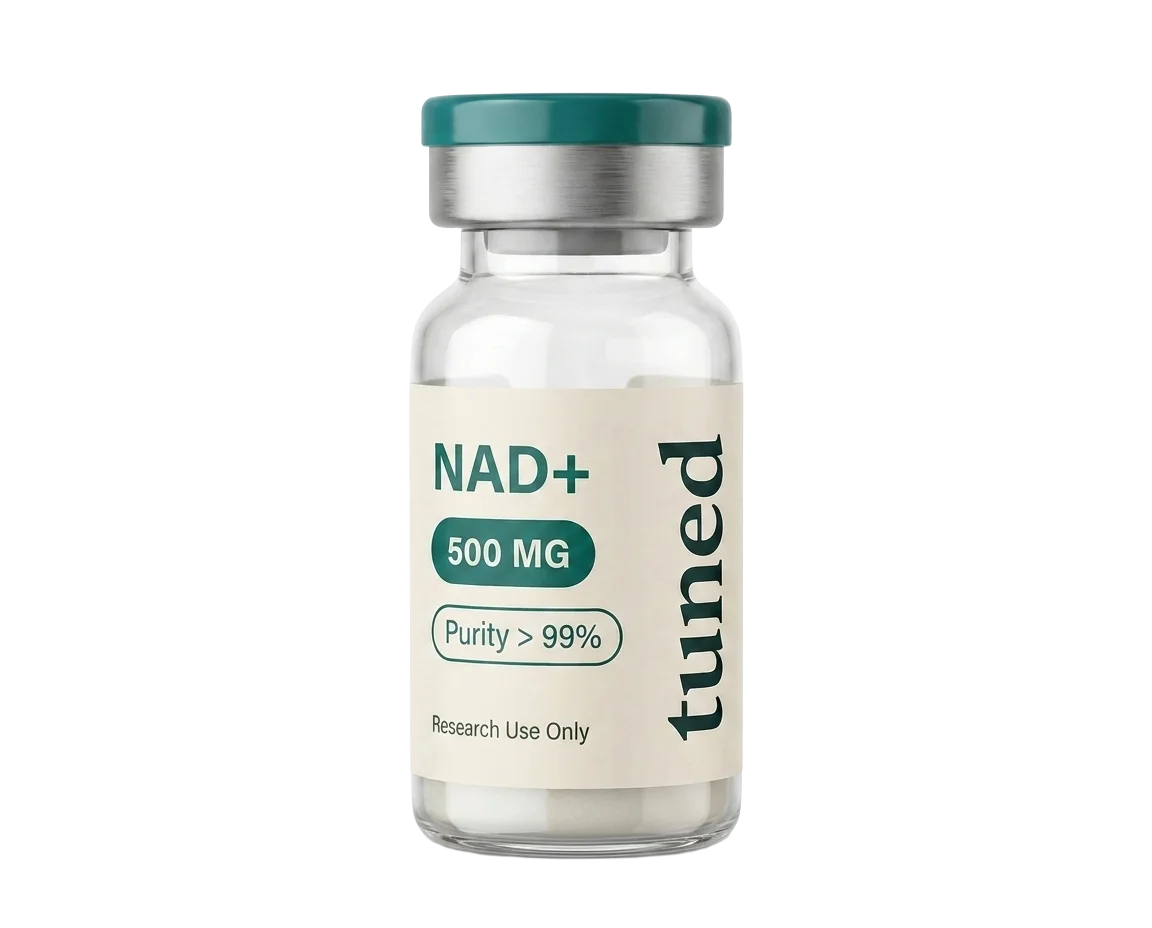
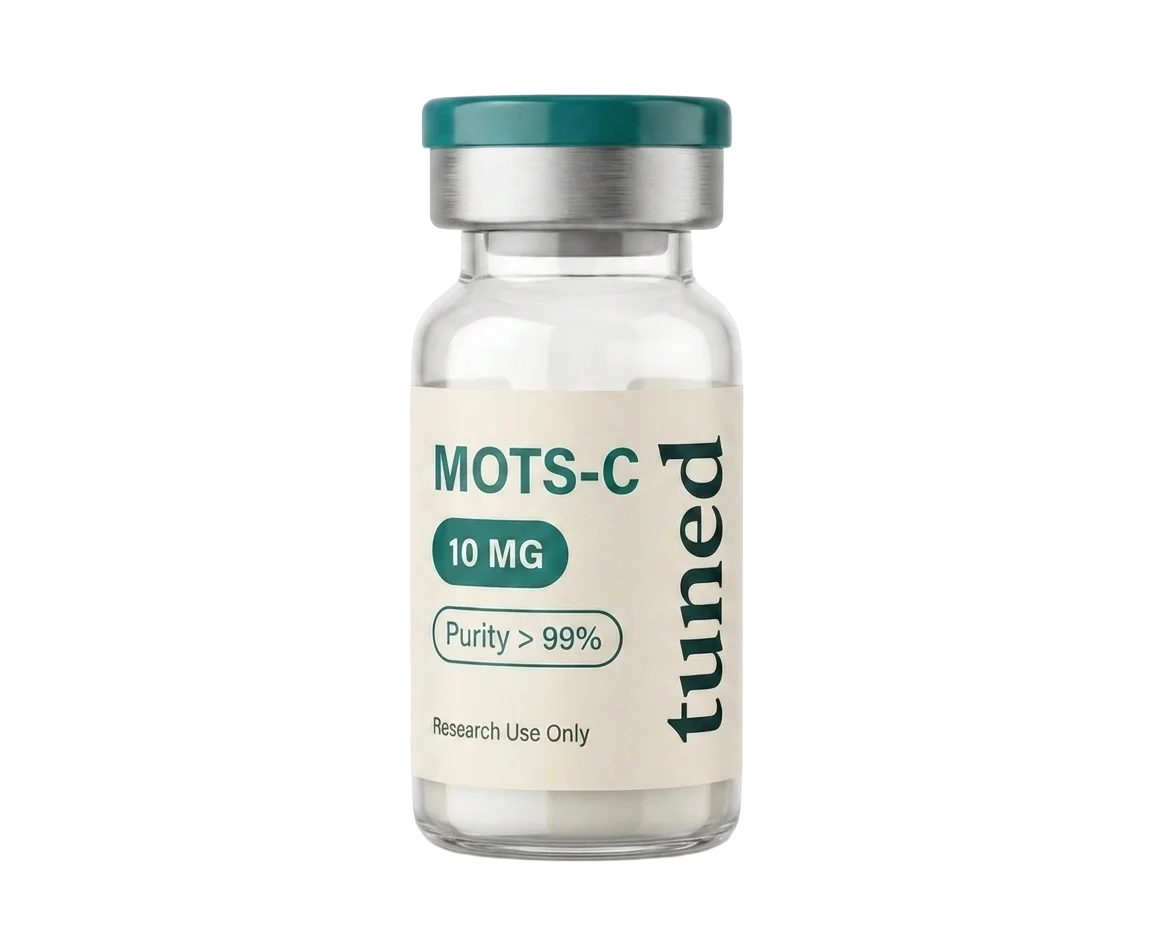
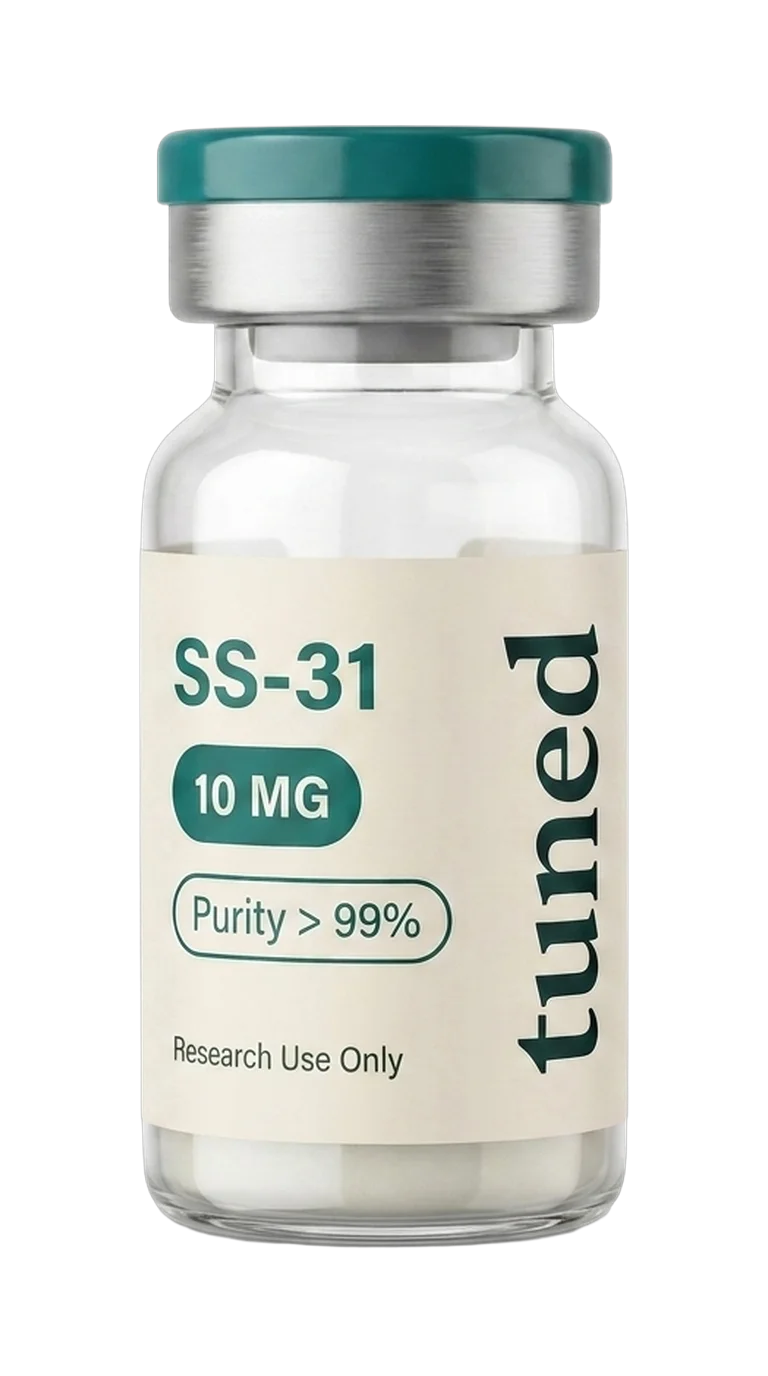
References
- Forman HJ, Zhang H, Rinna A. Glutathione: overview of its protective roles, measurement, and biosynthesis. Molecular Aspects of Medicine, 2009;30(1–2):1–12. PMID 18796312.
- Wu G, Fang YZ, Yang S, Lupton JR, Turner ND. Glutathione metabolism and its implications for health. Journal of Nutrition, 2004;134(3):489–492. PMID 14988435.
- Lu SC. Glutathione synthesis. Biochimica et Biophysica Acta, 2013;1830(5):3143–3153. PMID 22995213.
- Sekhar RV, Patel SG, Guthikonda AP, et al. Deficient synthesis of glutathione underlies oxidative stress in aging and can be corrected by dietary cysteine and glycine supplementation. American Journal of Clinical Nutrition, 2011;94(3):847–853. PMID 21795440.
- Richie JP Jr, Nichenametla S, Neidig W, et al. Randomized controlled trial of oral glutathione supplementation on body stores of glutathione. European Journal of Nutrition, 2015;54(2):251–263. PMID 24791752.
- Townsend DM, Tew KD, Tapiero H. The importance of glutathione in human disease. Biomedicine & Pharmacotherapy, 2003;57(3–4):145–155. PMID 12818476.
Sources are peer-reviewed. Glutathione is a tripeptide (γ-glutamyl-cysteinyl-glycine), the body's master antioxidant [1,2]. It declines with age [4]; oral supplementation can raise body stores [5]. Low glutathione is a marker associated with aging and disease, not a standalone diagnosis [6]. IV glutathione for skin/wellness is not FDA-approved. Not medical advice.
For research use only. Not for human consumption. This page summarises published research for educational purposes. It is not medical advice and is not intended to diagnose, treat, cure, or prevent any disease.