Glutathione for skin whitening
Glutathione can produce modest, temporary skin lightening in some randomized trials — using oral or topical forms — but the effect is subtle and reverses when use stops.[1][2][3] It works by inhibiting the pigment enzyme tyrosinase and shifting melanin toward a lighter type.[4] Critically, IV glutathione for skin whitening is not FDA-approved and is warned against by regulators, with documented serious reactions.[4] This page reports what research shows; it is not a promise of results.
Does glutathione whiten skin?
The honest answer: glutathione can modestly lighten skin in some controlled trials, but the effect is small, gradual and reversible — not a dramatic or permanent change.[1][2]
In a randomized, placebo-controlled study, oral glutathione significantly reduced melanin index at sun-exposed sites over four weeks.[1] A later randomized trial of oral glutathione (and its oxidized form) reported antimelanogenic effects over twelve weeks,[2] and a controlled trial of a 2% topical oxidized-glutathione lotion lowered melanin index.[3] So there is real trial support — but the consistent theme across this literature is that effects are modest and reverse once supplementation stops.
Does glutathione permanently lighten skin?
Put plainly: glutathione is not a guaranteed or permanent skin-whitening treatment. The research supports a subtle lightening and a more even tone in some people with sustained use, fading afterward — a cosmetic effect, not a dramatic transformation.
It also matters who's studied and for how long. Most trials are short (weeks to a few months) and measure a melanin index rather than dramatic visible change, and effects vary between people. So "glutathione lightened skin in a study" is true, but it describes a measurable, average, modest shift — not a guaranteed result for any individual, and not one that persists without continued use.
How glutathione affects skin
Glutathione affects skin pigment in two linked ways. First, it inhibits tyrosinase, the rate-limiting enzyme in melanin production, partly by interacting with the copper at the enzyme's core.[4] Second, it shifts melanin synthesis away from darker eumelanin toward lighter, reddish pheomelanin.[4]
How glutathione lightens skin
Because glutathione acts on the making of new pigment rather than removing existing pigment, any lightening appears slowly as skin turns over, and reverses as normal melanin production resumes once you stop.[4] That mechanism is exactly why the honest framing is "modest and temporary" rather than "permanent whitening."
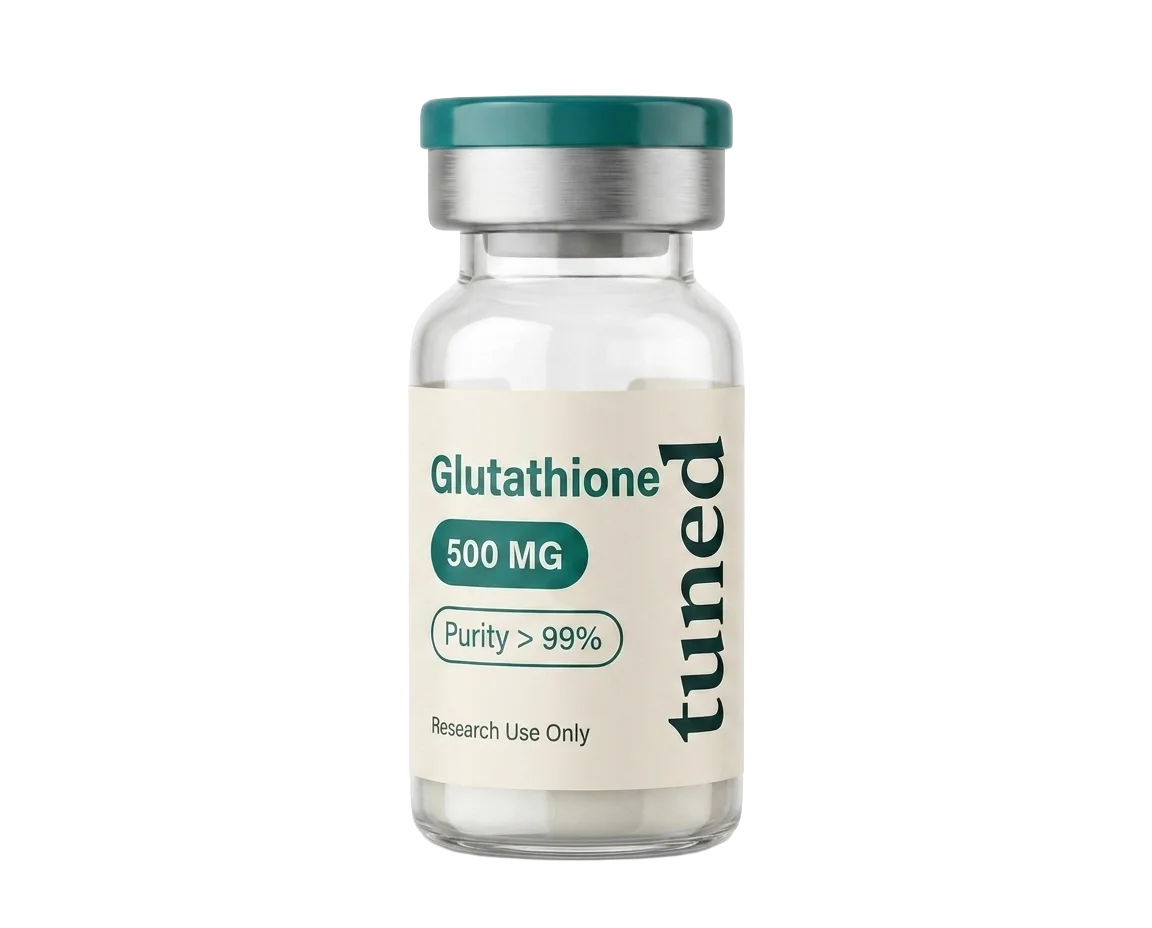
tuned Glutathione
For laboratory research use only · available to researchers. Specifications, pricing & Certificate of Analysis on the product page.
Oral vs IV vs topical for skin
The route matters a lot for both evidence and safety. Oral and topical glutathione have the controlled-trial support (modest effects),[1][2][3] while IV glutathione — the most aggressively marketed for skin whitening — has the least efficacy evidence and the most safety concern.[4]
| Route | Skin evidence | Safety / status |
|---|---|---|
| Oral | Modest effect in RCTs[1][2] | Well tolerated; supplement |
| Topical | Lowered melanin in one RCT (2% GSSG)[3] | Generally low-risk |
| IV | No controlled efficacy evidence | Not approved; warned-against[4] |
The takeaway: if the interest is skin research, the oral and topical routes are the ones with evidence behind them; the IV route is both the least proven and the most risky.
Best glutathione for skin whitening
The published evidence is limited and formulation-specific: randomized studies reported modest findings for certain oral and topical products, while regulators have warned about unapproved IV skin-lightening practices.[1][2][3][4] These studies do not establish a preferred product or provide use guidance.
Is glutathione skin whitening safe?
For oral and topical use, glutathione is generally low-risk.[1] For the IV route, it is not — a dermatology review documented serious adverse events from IV glutathione used for skin lightening, including severe skin reactions (Stevens-Johnson syndrome, toxic epidermal necrolysis), kidney and thyroid effects, and noted that national regulators have warned against the practice as unapproved and unsafe.[4] The cost-benefit is lopsided: a modest, temporary cosmetic effect on one side, documented serious reactions on the other — which is why dermatology reviews are sceptical of the IV route specifically.
tuned supplies research-grade glutathione for laboratory research only and does not provide cosmetic or IV services. This page reports published research and is not a recommendation, a promise of skin-whitening results, or medical advice.
Common questions
Does glutathione whiten skin?
How does glutathione lighten skin?
What does the formulation evidence show?
Is glutathione skin whitening safe?
Is glutathione approved for skin whitening?
References
- Arjinpathana N, Asawanonda P. Glutathione as an oral whitening agent: a randomized, double-blind, placebo-controlled study. Journal of Dermatological Treatment, 2012;23(2):97–102. PMID 20524875.
- Weschawalit S, Thongthip S, Phutrakool P, Asawanonda P. Glutathione and its antiaging and antimelanogenic effects. Clinical, Cosmetic and Investigational Dermatology, 2017;10:147–153. PMID 28490897.
- Watanabe F, Hashizume E, Chan GP, Kamimura A. Skin-whitening and skin-condition-improving effects of topical oxidized glutathione: a double-blind and placebo-controlled clinical trial in healthy women. Clinical, Cosmetic and Investigational Dermatology, 2014;7:267–274. PMID 25378941.
- Sonthalia S, Jha AK, Lallas A, et al. Glutathione for skin lightening: a regnant myth or evidence-based verity? Dermatology Practical & Conceptual, 2018;8(1):15–21. PMID 29445569.
Skin-lightening effects are modest and reversible in randomized trials: oral GSH [1,2] and topical 2% oxidized glutathione [3]. Mechanism (tyrosinase inhibition; eumelanin→pheomelanin shift) and the IV safety warnings/serious adverse events are from a dermatology review [4]. IV glutathione for skin whitening is unapproved and warned-against. This page reports research and is not a promise of results or medical advice.
For research use only. Not for human consumption. This page summarises published research for educational purposes. It is not medical advice and is not intended to diagnose, treat, cure, or prevent any disease.