Glutathione patches
Glutathione patches are transdermal patches marketed to deliver glutathione through the skin. The honest position: there is no published peer-reviewed evidence that glutathione patches raise glutathione levels or deliver their claimed benefits. Importantly, that's different from topical glutathione (creams/lotions), where one controlled trial of a 2% oxidized-glutathione lotion did lower skin melanin.[1] Patches and topicals are not the same evidence story — and tuned sells neither, supplying research-grade glutathione for laboratory research only.
What are glutathione patches?
Glutathione patches are adhesive transdermal patches that claim to deliver glutathione through the skin gradually, as an alternative format marketed in wellness channels.
The appeal is convenience — no needles, no clinic. But the claim runs into the same delivery problem any large molecule faces: intact skin is built to keep molecules like glutathione out, and getting a meaningful amount across the skin barrier from a patch is a real pharmacological challenge, not a given. That's where the evidence question starts.
Transdermal glutathione: the delivery problem
Transdermal glutathione — whether a patch or a cream meant to reach the bloodstream — has to cross skin that is specifically built to keep large, water-loving molecules out. That barrier is the crux: a patch can contain plenty of glutathione and still deliver little or none of it through intact skin, which is exactly the gap the evidence hasn't closed.
Some patch products lean on "phototherapy" or "stem cell activation" language rather than claiming to deliver glutathione across the skin at all, which is a tell: if a patch isn't actually putting glutathione into the body, then the glutathione content is beside the point. Either way, the question that matters — does the patch raise the body's glutathione or produce a measured effect — is the one without a published answer.
Do glutathione patches work?
There is no peer-reviewed evidence that glutathione patches raise glutathione levels or deliver the benefits they advertise — so the honest answer is that they are unproven.
Searches for "do glutathione patches work" deserve a straight answer: no published controlled study shows transdermal glutathione patches meaningfully increasing glutathione in the body or producing a measured benefit. The claims rest on general transdermal-delivery rationale and testimonials, not patch-specific data.
Do glutathione patches work for skin?
This is the key nuance. A glutathione patch has no efficacy data — but a glutathione topical lotion is a different product with a different result: a controlled trial of a 2% oxidized-glutathione lotion lowered skin melanin index.[1] The difference is that the topical study measured a skin outcome at the application site, whereas patches claim systemic delivery they haven't demonstrated. So "topical glutathione has some evidence" is true; "patches work" is not established.
This distinction is easy to blur in marketing, which often cites the topical-lotion skin research to imply patches work. They are different delivery systems tested in different ways: a lotion rubbed into skin and measured at that site is not evidence for an adhesive patch claiming whole-body glutathione delivery. Holding that line is the difference between an honest read and a borrowed one.
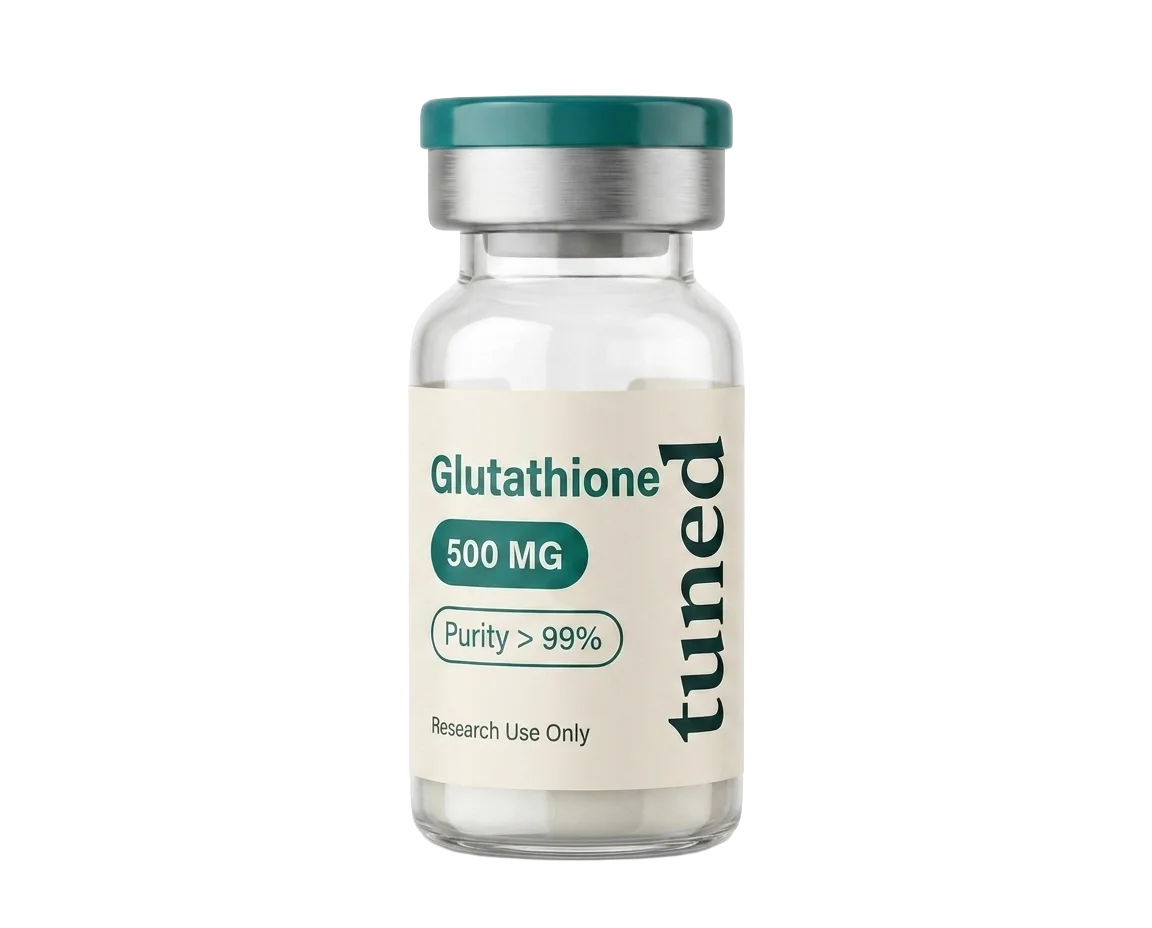
tuned Glutathione
For laboratory research use only · available to researchers. Specifications, pricing & Certificate of Analysis on the product page.
Topical glutathione for skin
Topical glutathione deserves its own note because, unlike patches, it has a controlled trial behind it for skin: a 2% oxidized-glutathione (GSSG) lotion lowered melanin index in a double-blind, placebo-controlled study in healthy women.[1] The effect, as with oral glutathione, was modest. So for skin research specifically, a properly formulated topical is the transdermal-adjacent route with the most evidence — distinct from the unproven patch format. The skin-whitening guide covers this in full. The key point for anyone comparing options: a tested topical formulation and an untested patch are not interchangeable just because both go on the skin. If skin is the goal, the formulation that was actually studied is the rational starting point — not the format that simply looks easiest.
tuned does not sell patches or topicals; we supply research-grade glutathione for laboratory research. This page flags patches as an unproven delivery format. Not medical advice.
Common questions
Do glutathione patches work?
What are glutathione patches?
Are glutathione patches the same as topical glutathione?
Does tuned sell glutathione patches?
References
- Watanabe F, Hashizume E, Chan GP, Kamimura A. Skin-whitening and skin-condition-improving effects of topical oxidized glutathione: a double-blind and placebo-controlled clinical trial in healthy women. Clinical, Cosmetic and Investigational Dermatology, 2014;7:267–274. PMID 25378941.
- Richie JP Jr, Nichenametla S, Neidig W, et al. Randomized controlled trial of oral glutathione supplementation on body stores of glutathione. European Journal of Nutrition, 2015;54(2):251–263. PMID 24791752.
- Sonthalia S, Jha AK, Lallas A, et al. Glutathione for skin lightening: a regnant myth or evidence-based verity? Dermatology Practical & Conceptual, 2018;8(1):15–21. PMID 29445569.
No peer-reviewed evidence supports transdermal glutathione patches raising glutathione or delivering benefits; they are flagged as unproven. Topical glutathione is distinct — a 2% oxidized-glutathione lotion lowered melanin index in one controlled trial [1]. Oral supplementation raises body stores [2]. Not medical advice.
For research use only. Not for human consumption. This page summarises published research for educational purposes. It is not medical advice and is not intended to diagnose, treat, cure, or prevent any disease.