Glutathione forms (liposomal, S-acetyl & oral)
Glutathione comes in several forms: reduced (L-glutathione), the active form; liposomal and S-acetyl versions designed for better oral absorption; plus oral, sublingual, topical and injectable. The evidence: sustained oral glutathione raises body stores[1]; liposomal glutathione also raised stores in a small study[3]; S-acetyl glutathione's "superior absorption" claim is not robustly substantiated. Note glutathione is unrelated to glutamine (a single amino acid), and NAC is a precursor that raises glutathione.[4]
What are the forms of glutathione?
Glutathione is sold in several forms, which differ mainly in how they're delivered and how well they're absorbed — not in the underlying molecule.[1]
The active substance is always reduced glutathione (GSH); the variations are about getting it into the body:
| Form | What it is | Absorption evidence |
|---|---|---|
| Reduced / L-glutathione | The reduced form studied in oral products | A six-month randomized trial reported increased stores[1] |
| Liposomal | GSH wrapped in lipid spheres | Raised stores in a small study[3] |
| S-acetyl glutathione | Acetylated, marketed as stable | "Superior absorption" not robustly shown |
| Topical / sublingual | Skin / under-tongue delivery | Topical has a skin-specific trial |
Is oral glutathione absorbed?
The central research question is absorption. An older single-exposure study reported little change in blood glutathione,[2] while a later six-month randomized trial reported increased body stores.[1] These different study designs help explain why the findings are not directly comparable.
Liposomal glutathione
Liposomal glutathione wraps the molecule in tiny lipid spheres (liposomes) intended to protect it through digestion and improve uptake. In a small pilot study, oral liposomal glutathione raised body glutathione stores and some markers of immune function.[3]
Is liposomal glutathione better absorbed?
That study is supportive but modest — it was small and not placebo-controlled — so "liposomal raises glutathione" has some backing, while "liposomal is dramatically better than standard oral" is not clearly established head-to-head. It's a reasonable, evidence-adjacent choice for oral delivery, not a proven leap over plain reduced glutathione.
The liposome idea is sound in principle — encapsulating a fragile molecule to shepherd it through the gut is a real pharmaceutical strategy — but "sound in principle" and "proven superior in humans" are different bars. For liposomal glutathione the first is met and the second only partly, which is the honest way to weigh it against cheaper standard oral glutathione.
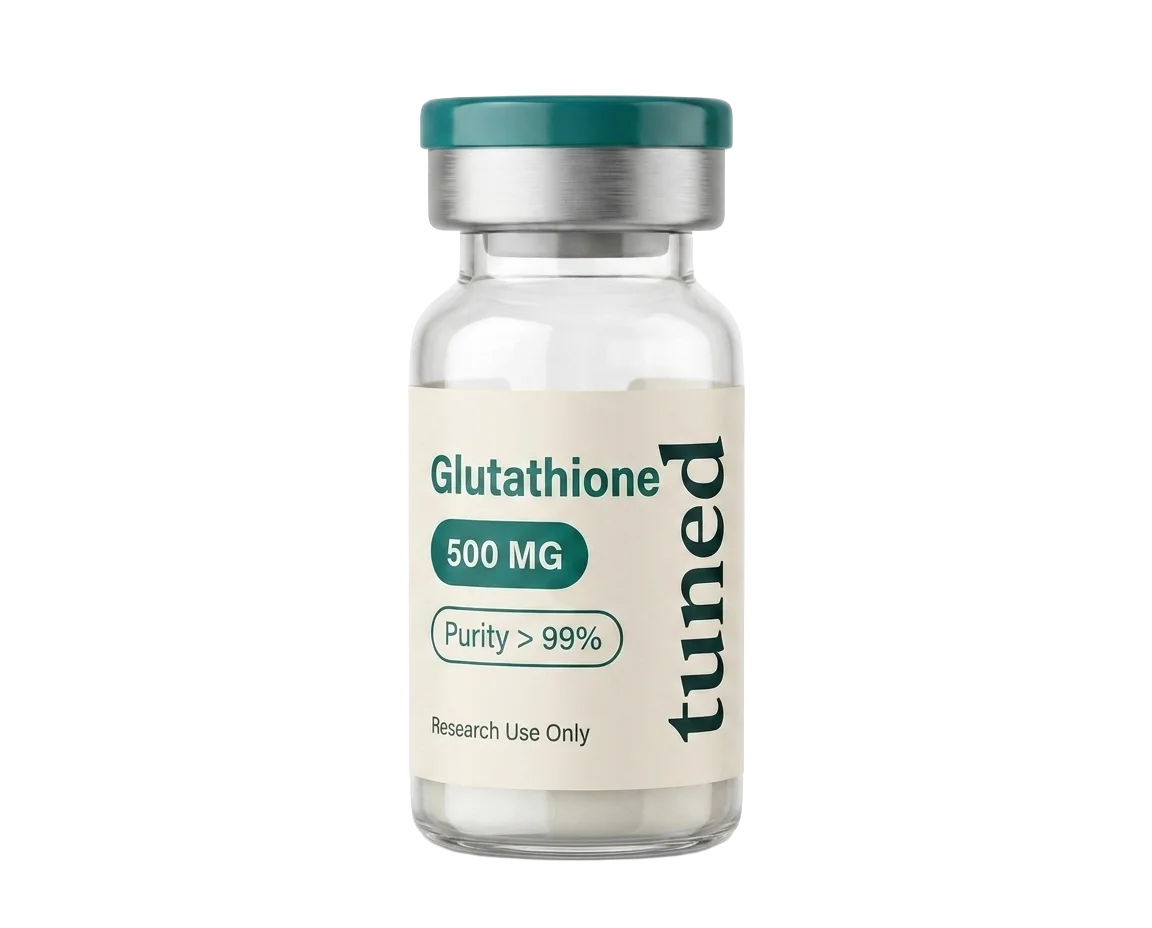
tuned Glutathione
For laboratory research use only · available to researchers. Specifications, pricing & Certificate of Analysis on the product page.
S-acetyl glutathione
S-acetyl glutathione (SAG) adds an acetyl group, marketed as making it more stable through digestion and better absorbed. Here the honesty matters: this "superior absorption" claim is not robustly substantiated in the peer-reviewed literature. The limited human data suggests the acetyl group is removed before absorption, so what's taken up is ordinary glutathione rather than an intact, better-absorbed molecule.
Does S-acetyl glutathione absorb better?
So while S-acetyl glutathione is a legitimate oral form, the strong absorption claims attached to it outrun the evidence. Treat "best-absorbed form" marketing as unverified; the forms with actual human absorption data are plain sustained oral[1] and, to a lesser extent, liposomal.[3]
Glutathione vs glutamine
"Glutathione vs glutamine" is a common mix-up, but they're different molecules. Glutamine is a single amino acid (the most abundant in blood, often labelled "conditionally essential"); glutathione is a tripeptide built from three amino acids.[1] They're easy to confuse by name and are loosely linked — glutamine can feed into glutamate, one of glutathione's three building blocks — but they're not interchangeable and do different jobs.
NAC vs glutathione
One genuinely related compound is NAC (N-acetylcysteine), which isn't glutathione but is a cysteine precursor the body uses to make glutathione — which is why NAC is used to raise intracellular glutathione.[4] So if the goal is boosting glutathione, NAC is a relevant precursor, whereas glutamine is largely a different conversation. The naming overlap is the only real connection; functionally, glutamine is studied for gut and muscle contexts while glutathione is the antioxidant-and-detox molecule — confusing them leads people to the wrong supplement entirely.
tuned supplies research-grade glutathione for laboratory research. Form names describe delivery, not different active molecules — the active substance is reduced glutathione in every case, and the real question is only how much of it reaches the body. Not medical advice.
Common questions
What are the forms of glutathione?
Is liposomal glutathione better?
Does S-acetyl glutathione absorb better?
What is the difference between glutathione and glutamine?
Is NAC the same as glutathione?
References
- Richie JP Jr, Nichenametla S, Neidig W, et al. Randomized controlled trial of oral glutathione supplementation on body stores of glutathione. European Journal of Nutrition, 2015;54(2):251–263. PMID 24791752.
- Witschi A, Reddy S, Stofer B, Lauterburg BH. The systemic availability of oral glutathione. European Journal of Clinical Pharmacology, 1992;43(6):667–669. PMID 1362956.
- Sinha R, Sinha I, Calcagnotto A, et al. Oral supplementation with liposomal glutathione elevates body stores of glutathione and markers of immune function. European Journal of Clinical Nutrition, 2018;72(1):105–111. PMID 28853742.
- Rushworth GF, Megson IL. Existing and potential therapeutic uses for N-acetylcysteine: the need for conversion to intracellular glutathione for antioxidant benefits. Pharmacology & Therapeutics, 2014;141(2):150–159. PMID 24080471.
Sustained oral glutathione raises body stores [1] even though a single large dose historically did not [2]; liposomal glutathione raised stores in a small pilot [3]. S-acetyl glutathione "superior absorption" is not robustly substantiated. NAC is a cysteine precursor that raises intracellular glutathione [4]; glutamine is an unrelated amino acid. Not medical advice.
For research use only. Not for human consumption. This page summarises published research for educational purposes. It is not medical advice and is not intended to diagnose, treat, cure, or prevent any disease.