Oxytocin nasal spray
The oxytocin nasal spray is the form behind almost all the human research — the intranasal route is how oxytocin was given in the trust, social-cognition and anxiety studies, on the theory it can reach the brain directly.[1] The honest complication: a substantial scientific debate questions how much intranasal oxytocin actually reaches the brain and how reliable the social findings are.[2][3] The research compound is not the approved obstetric drug, and this page describes the research, not how to use it.
Oxytocin nasal spray
When studies give oxytocin for social or emotional effects, they almost always use a nasal spray — the intranasal route is the near-universal method in this research, chosen because the nose offers a potential path toward the brain that avoids a needle.[1]
That's why "oxytocin nasal spray" and "oxytocin spray" dominate the searches: the spray is the research form. The landmark trust experiment and the bulk of the social-cognition and anxiety work all administered oxytocin intranasally.[1][6]
Oxytocin nasal spray for men and women
The intranasal research has included both men and women; the route and mechanism aren't sex-specific, though individual studies often focus on one group or specific tasks. Differences people read into "for men" versus "for women" spray are study-design details, not established sex-specific effects.
What the intranasal oxytocin research shows
The intranasal studies report effects on social and stress-related measures — increased trust in an economic game, lowered cortisol when paired with social support, and ongoing investigation in anxiety.[1][4][6] These are the basis of oxytocin's reputation.
How long does oxytocin nasal spray take to work?
Intranasal oxytocin studies use protocol-specific observation windows, but those experimental designs do not establish onset or timing guidance for research material.[1] Whether a measurable brain effect occurs is part of the continuing delivery debate described below.
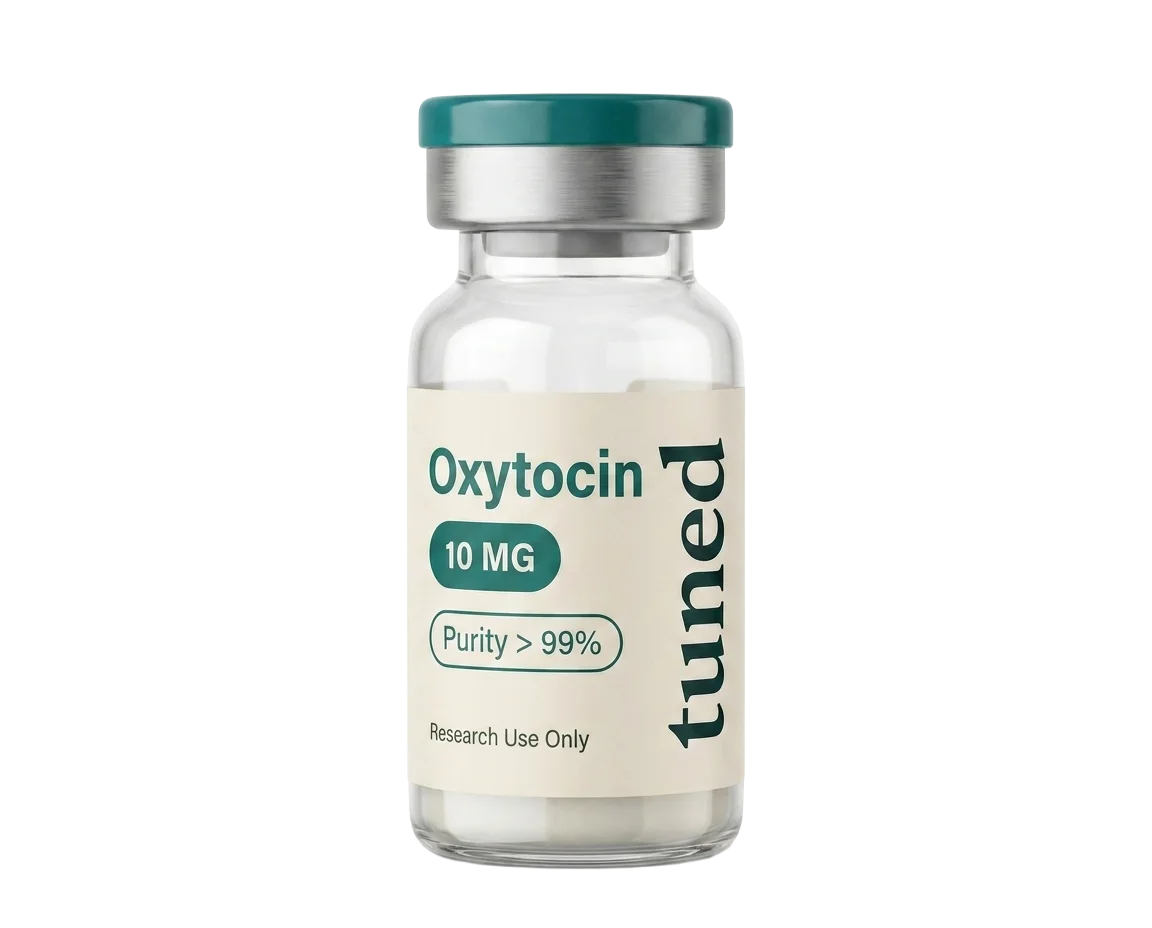
tuned Oxytocin
For laboratory research use only · available to researchers. Specifications, pricing & Certificate of Analysis on the product page.
Does intranasal oxytocin reach the brain?
This is the question that hangs over the whole field. The intranasal route is assumed to deliver oxytocin to the brain, but how much actually crosses — and whether it's enough to drive the reported social effects — is genuinely contested.[3]
Why the debate matters for every nasal-spray claim
Critical reviews have argued that the central-delivery evidence is weaker than the popular narrative implies, and that publication and replication issues inflated the early social findings.[2][3] This doesn't mean intranasal oxytocin does nothing — stress-buffering and some anxiety signals are reasonably supported[4][6] — but it does mean any confident "oxytocin nasal spray will do X" claim is running ahead of settled science. The honest read is an open, actively debated research area, not an established consumer effect, and oxytocin is not approved for these uses.
The crux of the delivery question is mechanical: only a small fraction of an intranasally administered peptide is thought to reach the cerebrospinal fluid, and how that maps to receptor-level effects in specific brain regions is uncertain — which is why two careful researchers can read the same dataset and disagree about whether the social findings reflect central oxytocin action at all.[3] For anyone weighing a nasal spray, that uncertainty is the single most important fact: the route is genuine and widely used in research, but its reliability for producing a given effect is exactly what remains unresolved.
Common questions
Is oxytocin a nasal spray?
Does intranasal oxytocin actually reach the brain?
What does the intranasal oxytocin research show?
Is oxytocin nasal spray FDA approved?
References
- Kosfeld M, Heinrichs M, Zak PJ, et al. Oxytocin increases trust in humans. Nature, 2005;435(7042):673–676. PMID 15931222. (Intranasal administration; landmark social finding.)
- Nave G, Camerer C, McCullough M. Does Oxytocin Increase Trust in Humans? A Critical Review of Research. Perspect Psychol Sci, 2015;10(6):772–789. PMID 26581735. (Replication concerns.)
- Evans SL, Dal Monte O, Noble P, et al. Intranasal oxytocin effects on social cognition: a critique. Brain Res, 2014;1580:69–77. PMID 24239931. (Brain-delivery and methodology critique.)
- Heinrichs M, Baumgartner T, Kirschbaum C, et al. Social support and oxytocin interact to suppress cortisol and subjective responses to psychosocial stress. Biol Psychiatry, 2003;54(12):1389–1398. PMID 14675803. (Stress buffering, intranasal.)
- Moshfeghinia R, Sanaei E, et al. Exploring the efficacy of intranasal oxytocin for anxiety and stress-related disorders. BMC Pharmacol Toxicol, 2025. PMID 41074229. (Anxiety evidence synthesis.)
Intranasal administration is the route used in nearly all oxytocin social/anxiety research [1][4][6], but whether enough reaches the brain — and how robust the social effects are — is genuinely contested [2][3]. Some signals (stress buffering, anxiety) are reasonably supported; the broad claims are not settled. Oxytocin is FDA-approved only as an injectable obstetric drug; the intranasal research form is not an approved product, and the research-chemical is not the approved medicine. This page describes the research, not preparation or administration. Not medical advice.
For research use only. Not for human consumption. This page summarises published research for educational purposes. It is not medical advice and is not intended to diagnose, treat, cure, or prevent any disease.