NAD+ patches
NAD+ patches are transdermal (through-the-skin) patches marketed to raise NAD+ levels gradually. The honest position: there is no published peer-reviewed evidence that NAD+ patches meaningfully raise NAD+ or produce the claimed benefits, and NAD+ is a large molecule that doesn't cross intact skin easily. By contrast, the methods with real human data are oral precursors (NR, NMN), which raised NAD+ in controlled trials.[1][2] Treat patch benefit claims as unproven.
What are NAD+ patches?
NAD+ patches are adhesive transdermal patches that claim to deliver NAD+ (or its precursors) through the skin slowly over hours, as an alternative format marketed in wellness channels.
The marketing appeal is obvious — no needles, no clinic, just a patch. But the claim runs into a basic delivery problem. NAD+ is a relatively large, water-loving molecule, and intact skin is specifically built to keep molecules like that out. Getting a meaningful amount of NAD+ across the skin barrier is a genuine pharmacological challenge, not a given, and that's where the evidence question begins. Transdermal patches are well established for certain small, fat-soluble drugs — but NAD+ fits neither description, which is precisely why its delivery through skin can't be assumed from the success of other patches.
Do NAD+ patches work?
There is no peer-reviewed evidence that NAD+ patches raise systemic NAD+ levels or deliver the benefits they advertise — so the honest answer is that they are unproven.
This is the most important thing to know about NAD+ patches, and we won't soften it. Searches for "do NAD patches work" deserve a straight answer: no published controlled study shows transdermal NAD+ patches meaningfully increasing NAD+ in the body. The benefits cited by sellers rest on general transdermal-delivery rationale and customer testimonials, not on NAD+-specific data.
Why skepticism is warranted
Contrast that with the methods that do have human evidence: oral precursors NR and NMN raised blood NAD+ in controlled trials.[1][2] Those work because they're small molecules the gut can absorb and the body converts. A patch has to solve the skin-permeation problem first, and no published data shows NAD+ patches doing so. Until such data exists, patch claims should be treated as marketing, not evidence.
"NAD+ patch reviews" are worth a word here too. Positive user reviews are easy to find, but a review describes how someone felt, not whether their blood NAD+ actually rose — and feelings are exactly where the placebo effect is strongest. Without a study measuring NAD+ levels before and after patch use, testimonials can't substitute for evidence of delivery. That's the gap that matters: not whether people like the patches, but whether the patches put NAD+ where it needs to be.
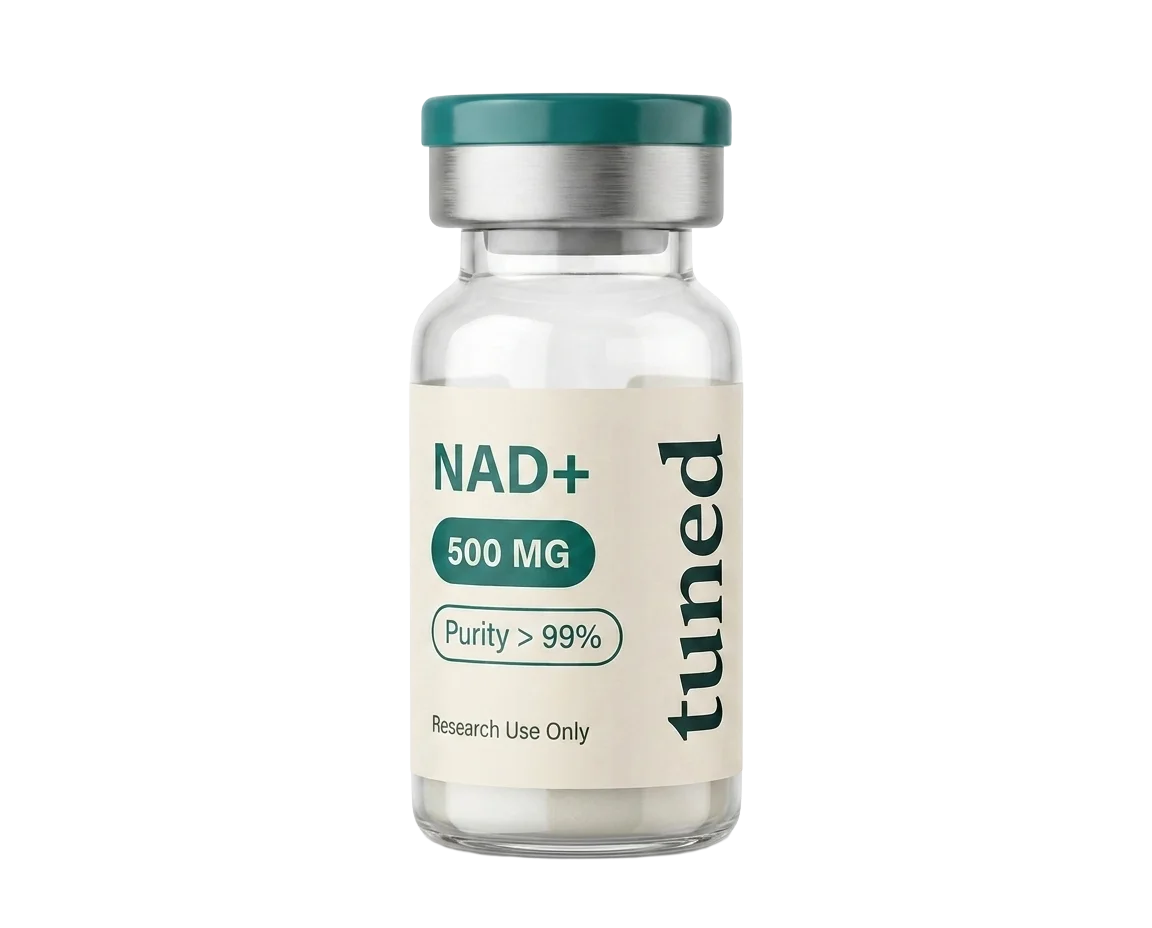
tuned NAD+
For laboratory research use only · available to researchers. Specifications, pricing & Certificate of Analysis on the product page.
NAD+ patches benefits (and the caveat)
The benefits advertised for NAD+ patches mirror NAD+ itself — energy, focus, healthy aging — because they borrow NAD+'s general story.[3] The caveat is that those benefits depend on the patch actually raising NAD+, which, as above, has no published support. So while the concept (gradual transdermal NAD+) is appealing, the benefit claims are inherited from NAD+ in general, not demonstrated for the patch format.
Patch-specific benefit claims remain unsupported because no controlled study has established systemic delivery from this format.
Common questions
Do NAD+ patches work?
What are NAD+ patches?
What are the benefits of NAD+ patches?
Does tuned sell NAD+ patches?
References
- Trammell SAJ, Schmidt MS, Weidemann BJ, et al. Nicotinamide riboside is uniquely and orally bioavailable in mice and humans. Nature Communications, 2016;7:12948. PMID 27721479.
- Martens CR, Denman BA, Mazzo MR, et al. Chronic nicotinamide riboside supplementation is well-tolerated and elevates NAD+ in healthy middle-aged and older adults. Nature Communications, 2018;9(1):1286. PMID 29599478.
- Verdin E. NAD+ in aging, metabolism, and neurodegeneration. Science, 2015;350(6265):1208–1213. PMID 26785480.
- Grant R, Berg J, Mestayer R, et al. A pilot study investigating changes in the human plasma and urine NAD+ metabolome during a 6 hour intravenous infusion of NAD+. Frontiers in Aging Neuroscience, 2019;11:257. PMID 31572171.
No peer-reviewed evidence supports transdermal NAD+ patches raising NAD+ or delivering benefits; they are flagged as unproven. The methods with human data are precursors (NR/NMN) [1,2] and, for IV, one controlled pilot [4]. NAD+ declines with age [3]. NAD+ is not an approved drug. Not medical advice.
For research use only. Not for human consumption. This page summarises published research for educational purposes. It is not medical advice and is not intended to diagnose, treat, cure, or prevent any disease.