Semax vs Selank
Semax and Selank are both small Russian peptides, but they lean different ways: Semax is derived from the hormone ACTH and is studied as a nootropic and neuroprotective agent (it raises BDNF/NGF),[2] while Selank is derived from the immune peptide tuftsin and is studied as an anxiolytic (anti-anxiety) agent.[3] They share a stabilising tail, but their proposed effects and evidence bases differ.
Semax vs Selank — what's the difference?
The core difference between Semax and Selank is their origin and their lean: Semax is an ACTH fragment studied for cognition and brain protection, Selank is a tuftsin fragment studied for anxiety and calm.[1]
Both came out of the same Russian peptide research tradition, both are short heptapeptides, and both carry a Pro-Gly-Pro tail that makes them stable — which is why they're so often mentioned together. But they're built from different parent molecules and pull in different directions:
| Semax | Selank | |
|---|---|---|
| Derived from | ACTH(4–10) (a stress-hormone fragment) | Tuftsin (an immune peptide) |
| Main research lean | Nootropic, neuroprotective | Anxiolytic (anti-anxiety), immunomodulatory |
| Key mechanism | Raises BDNF/NGF; dopamine & serotonin[2] | Calms anxiety signalling; affects GABA/serotonin[3] |
| Best-known use | Focus, memory, stroke recovery | Anxiety, stress, calm focus |
The mechanisms compared
Mechanistically they overlap at one neat point and diverge elsewhere. A 2001 study by Nikolai Kost and colleagues showed that both Semax and Selank slow the enzymes that break down the body's own enkephalins, which is part of why both feel "active" in the brain.[1] Beyond that they split: Semax leans on growth factors (BDNF, NGF) and dopamine/serotonin for its nootropic effect,[2] while Selank's tuftsin origin steers it toward anxiety and immune signalling.[3]
The Semax and Selank stack
The combination is promoted on a claim of complementary mechanisms, but that claim has not been tested in a controlled trial.
Why researchers pair them
The proposed rationale draws on their different mechanisms, but the Semax + Selank combination is a community convention, not a combination validated in human trials. Any synergy claim is anecdotal and the safety of the combination is unstudied.
What the combination evidence shows
No controlled trial has evaluated Semax and Selank together. Claims about synergy, sequencing or combined effects come from community anecdotes rather than validated research, and the safety of the combination has not been established.
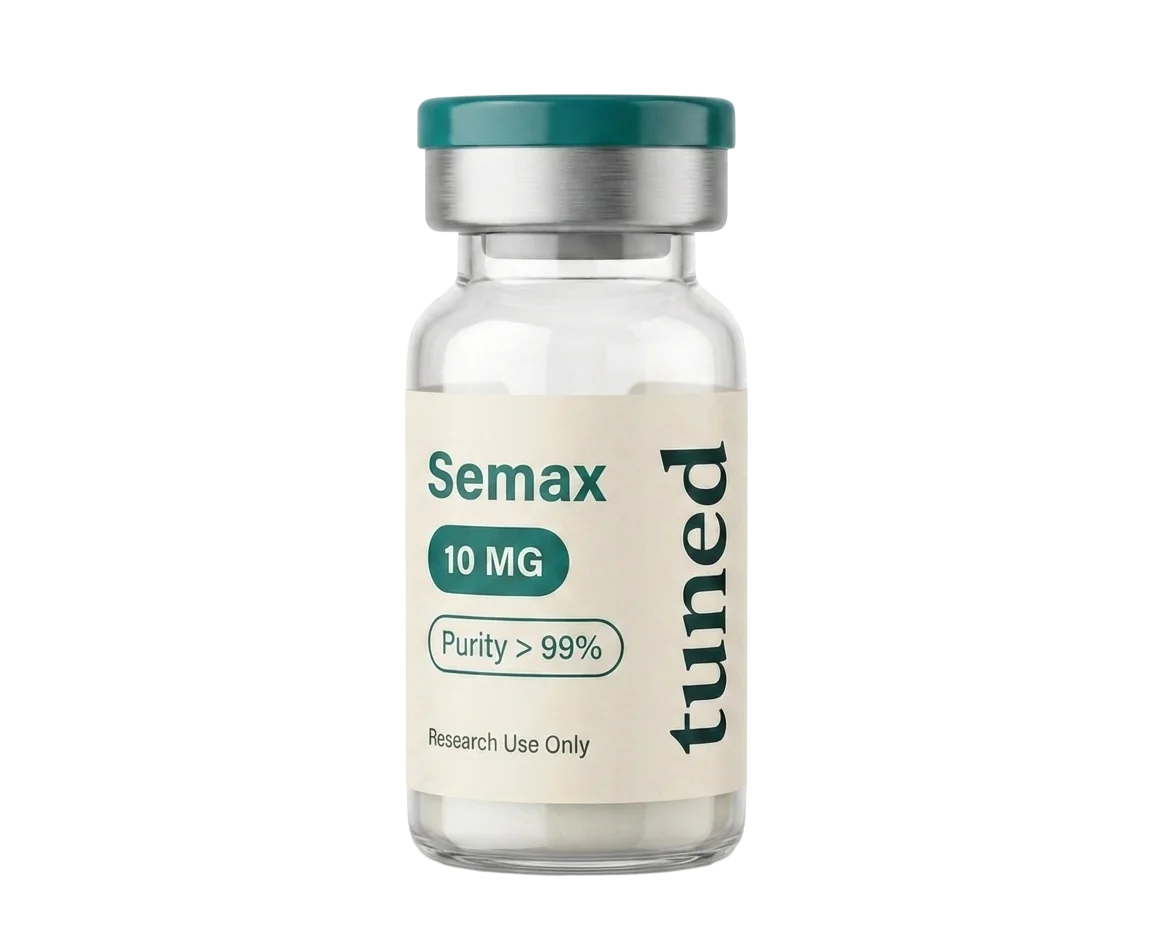
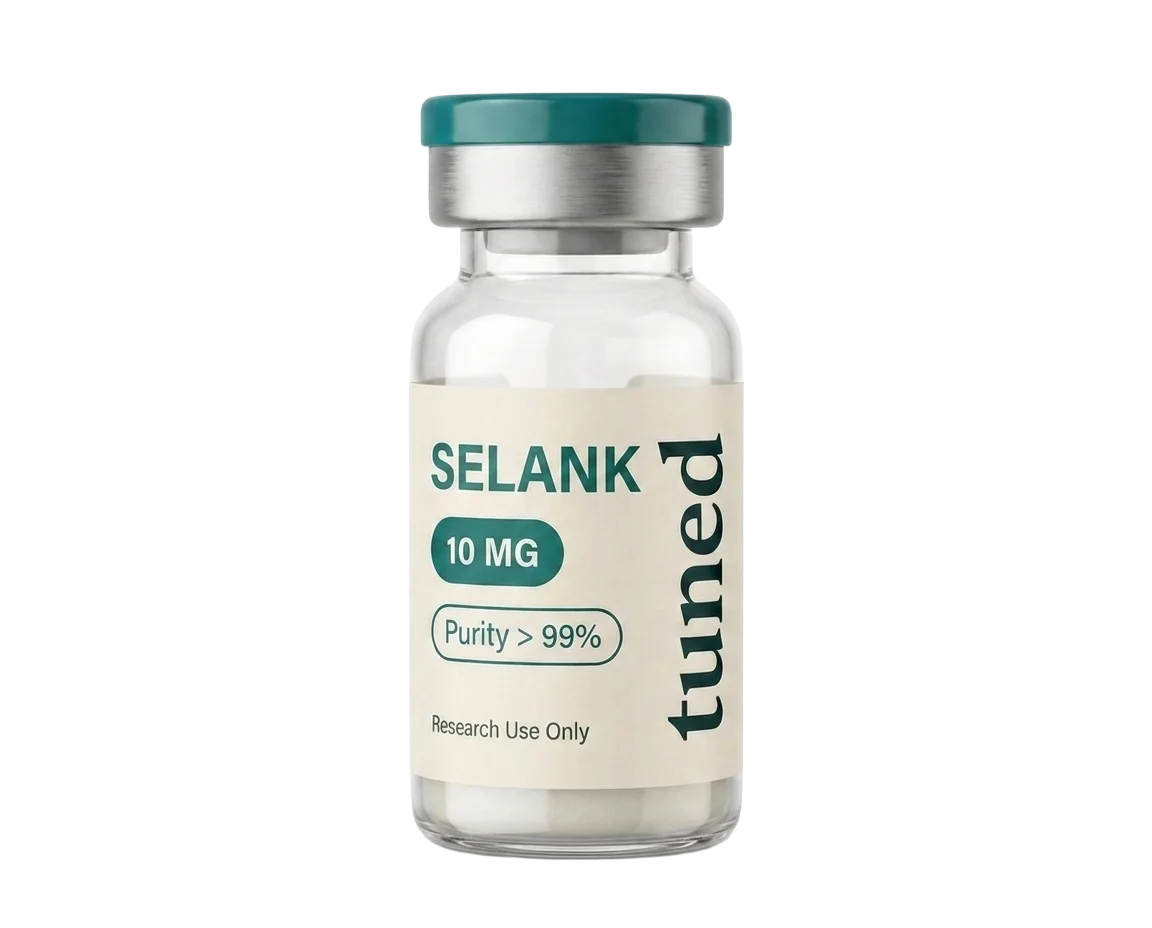
tuned Semax & Selank
For laboratory research use only · available to researchers. Specifications, pricing & Certificate of Analysis on the product page.
Which is better, Semax or Selank?
There's no "better" in the abstract — Semax and Selank are better at different things, so the right one depends on the research goal. If the interest is focus, cognition or neuroprotection, Semax is the more relevant peptide;[2] if it's anxiety, stress or calm, Selank is.[3]
Matching the peptide to the goal
A simple way to frame it: Semax is the "drive" peptide and Selank is the "calm" peptide. Researchers focused on mental performance, memory or recovery from neurological stress lean Semax; those focused on anxiety, over-arousal or stress reactivity lean Selank. People interested in both sometimes run the stack — accepting that the combination is unvalidated. Whichever you choose, the evidence base is mostly Russian and preclinical for both, and neither is FDA-approved, so both are strictly research compounds.
If you're deciding between them for the first time, the cleaner approach is to pick the one that matches your single most important research question rather than reaching for both at once. Studying each peptide on its own makes its effects easier to attribute, whereas starting with the stack blurs which compound is doing what. The shared traits — Russian origin, heptapeptide structure, intranasal route, a stabilising Pro-Gly-Pro tail and enkephalinase inhibition[1] — mean they're easy to confuse, but their primary directions (cognition versus calm) are distinct enough that the goal usually points clearly to one.
| If your research goal is… | Lean toward |
|---|---|
| Focus, memory, mental stamina | Semax |
| Neuroprotection / stroke models | Semax |
| Anxiety, stress, calm | Selank |
| Calm focus (both) | The stack (unvalidated) |
Common questions
What's the difference between Semax and Selank?
Is Selank just Semax for anxiety?
Are Semax and Selank approved?
References
- Kost NV, Sokolov OYu, Gabaeva MV, et al. Semax and selank inhibit the enkephalin-degrading enzymes from human serum. Russian Journal of Bioorganic Chemistry, 2001;27(3):180–183. PMID 11443939.
- Dolotov OV, Karpenko EA, Inozemtseva LS, et al. Semax, an analog of ACTH(4-10) with cognitive effects, regulates BDNF and trkB expression in the rat hippocampus. Brain Research, 2006;1117(1):54–60. PMID 16996037.
- Kolik LG, Nadorova AV, Antipova TA, et al. Selank, peptide analogue of tuftsin, protects against ethanol-induced memory impairment by regulating BDNF content in the hippocampus and prefrontal cortex in rats. Bulletin of Experimental Biology and Medicine, 2019;167(5):641–644. PMID 31625062.
Source [1] documents both peptides' sequences and enkephalinase inhibition; [2] is Semax mechanism (preclinical); [3] is Selank mechanism (preclinical). The Semax + Selank stack is a community convention with no controlled-trial validation. Both peptides are approved in Russia but not by the FDA/EMA. Not medical advice.
For research use only. Not for human consumption. This page summarises published research for educational purposes. It is not medical advice and is not intended to diagnose, treat, cure, or prevent any disease.