What is sermorelin?
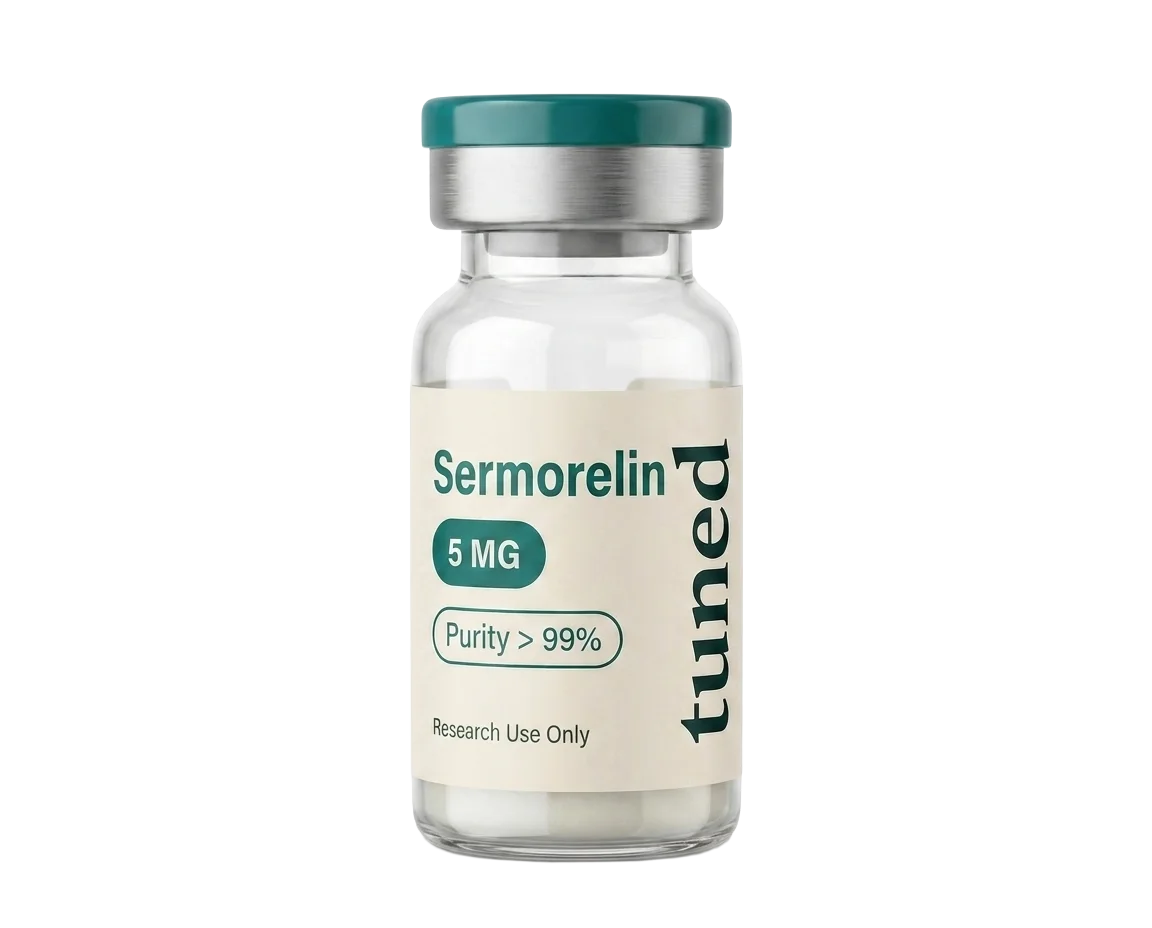
Sermorelin is a GHRH analog — specifically GHRH(1-29), the shortened active piece of the body's own growth-hormone-releasing hormone.[1] It binds the GHRH receptor on the pituitary and asks it to release its own growth hormone, which in turn raises IGF-1.[2] Unusually for this catalogue, it has a real regulatory history: it was an FDA-approved diagnostic and treatment (as Geref) before being withdrawn from the US market in 2008 for commercial reasons.[1]
What is sermorelin, exactly?
Sermorelin is a synthetic peptide made of the first 29 amino acids of human growth-hormone-releasing hormone — written GHRH(1-29)NH₂ — which is the smallest fragment that keeps the full hormone's GH-releasing activity.[1][5]
That makes it a growth-hormone-releasing hormone analog: instead of supplying growth hormone from outside, it copies the natural upstream signal that tells the pituitary to make and release GH. It's also known as sermorelin acetate (the salt form) and historically by the brand name Geref.[1]
Is sermorelin a peptide? And what is sermorelin acetate?
Yes — sermorelin is a 29-amino-acid peptide. "Sermorelin acetate" is simply the acetate-salt form used for stability; it's the same molecule. Like other research peptides it comes as a lyophilized powder and is studied as an injectable, because the digestive tract would break the peptide down before it could work.[6]
How does sermorelin work?
Sermorelin works one step upstream of growth hormone. It binds the GHRH receptor on the pituitary's somatotroph cells — the same receptor the hypothalamus uses — prompting them to release stored GH in a natural-shaped pulse, which then drives IGF-1 production in the liver.[2][5]
The GHRH-analog mechanism, and why it matters
Sermorelin acts upstream of growth hormone and remains subject to normal pituitary feedback mechanisms.[2] A controlled study in healthy older men reported partial reversal of age-related GH and IGF-1 decline under its defined research protocol.[2]
Sermorelin benefits
The sermorelin benefits described in research all follow from raising the body's own GH and IGF-1 toward more youthful levels — and they are best read as research findings in specific populations, not guaranteed effects:
- Age-related GH/IGF-1 research. A controlled study reported partial reversal of age-related GH and IGF-1 decline under defined research conditions.[2]
- Body-composition interest. Longer-term GHRH-analog administration in older adults produced endocrine and metabolic effects consistent with the GH/IGF-1 axis.[3]
- Diagnostic/clinical track record. It was an approved tool for assessing and treating growth-hormone deficiency, so its GH-releasing action is well-documented.[1]
- Recovery & sleep interest. Because GH peaks during deep sleep, sermorelin is popular in recovery/sleep discussion — mechanism-led, not proven outcomes.
Sermorelin benefits for males and females, and results
The underlying GH/IGF-1 mechanism is not sex-specific, and the older-adult research included both men and women.[3] So "sermorelin benefits for males" and "for females" draw on the same biology; differences people report are individual, not established by sex-specific trials. As for results, the honest framing is that measured changes (IGF-1, GH pulses) are documented in studies, while the popular body-composition and "anti-aging" outcomes are extrapolations — sermorelin is not an approved treatment for them. For self-reported timelines, see the sermorelin before and after guide.
Sermorelin for weight loss
"Sermorelin for weight loss" is a common search because growth hormone has lipolytic (fat-mobilizing) effects, and restoring GH/IGF-1 in adults with low levels has metabolic consequences.[3] The reasoning is biologically real: more GH signalling can shift body composition.
Does sermorelin help with weight loss?
The honest answer is that there is no controlled sermorelin weight-loss trial establishing it as a fat-loss agent, and it is not approved for weight loss. What exists is mechanism (GH lipolysis) plus older-adult metabolic data,[3] not outcome trials in people seeking weight loss. Treat "sermorelin for weight loss" as a research-stage hypothesis, not a demonstrated result.
tuned Sermorelin
For laboratory research use only · available to researchers. Specifications, pricing & Certificate of Analysis on the product page.
Sermorelin and testosterone
A frequent question is whether sermorelin raises testosterone or fits alongside testosterone replacement (TRT). The key fact: sermorelin acts on the GH/IGF-1 axis, which is biologically distinct from the gonadal (testosterone) axis. It signals the pituitary's growth-hormone cells, not the pathway that drives testosterone, so it does not directly raise testosterone.[2]
Does sermorelin increase testosterone, and sermorelin with TRT
Because the two axes are separate, sermorelin should not be expected to act as a testosterone booster. It is sometimes discussed alongside TRT in clinic and community settings — the idea being to address the GH side of age-related decline while TRT addresses the gonadal side — but pairing them is a community/clinic practice, not a validated protocol, and we present it as such, without a controlled trial behind it. We don't provide study protocol or combination guidance.
Sermorelin vs CJC-1295
Sermorelin and CJC-1295 are both GHRH analogs — they work on the same receptor and the same "release your own GH" principle. The defining difference is duration: sermorelin is short-acting, mimicking a brief natural GHRH pulse, while CJC-1295 (especially the DAC form, which binds serum albumin) keeps the GH/IGF-1 signal elevated for far longer.[2]
Is CJC-1295 better than sermorelin?
Neither is simply "better." CJC-1295's long action means fewer, steadier exposures and a higher baseline IGF-1; sermorelin's short action stays closer to natural pulsatility, which some researchers prefer. Sermorelin also carries the stronger formal track record from its approved history.[1] A related question — "sermorelin vs MK-677" — is really GHRH analog vs an oral ghrelin-receptor secretagogue, a different mechanism entirely. For the GHRH-analog-plus-secretagogue logic, see the CJC-1295 + ipamorelin guide.
Is sermorelin safe?
Of the peptides in this catalogue, sermorelin has one of the better-documented safety records, precisely because it was a regulated product. In its approved use the most common adverse effects were injection-site reactions and, less often, facial flushing, headache, or transient altered taste.[1] That said, the research-chemical "sermorelin" sold to labs is not the pharmaceutical-grade Geref, and modern long-term safety data for non-approved uses are limited.
Sermorelin side effects and how to choose
Beyond the GHRH-specific effects, the GH/IGF-1 mechanism brings the usual class considerations (fluid retention, effects on glucose handling), and the theoretical caution around chronically raising IGF-1 applies to any GH-axis compound. For a fuller treatment see the sermorelin side effects guide. For choosing material, quality is the dominant variable: a batch-specific Certificate of Analysis (UPLC purity, identity, endotoxin) does more for safety than any convention. On sport, GH-axis agents are prohibited by WADA, so drug-tested athletes should treat sermorelin as banned.
Common questions
What is sermorelin?
How does sermorelin work?
Does sermorelin help with weight loss or testosterone?
What's the difference between sermorelin and CJC-1295?
Is sermorelin safe or FDA approved?
Sermorelin guides
This page is the overview. These guides go deeper on the questions researchers ask most:
Related growth-hormone peptide guides
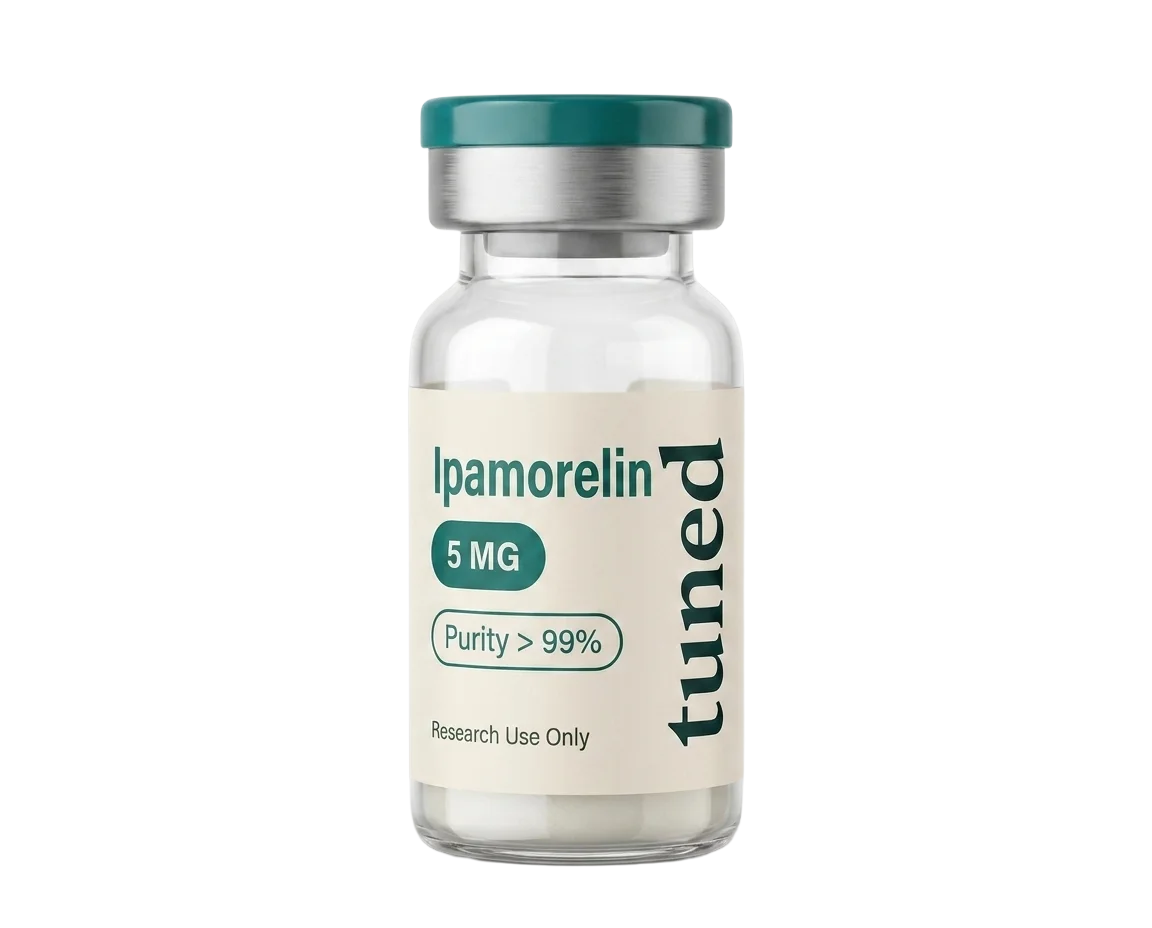
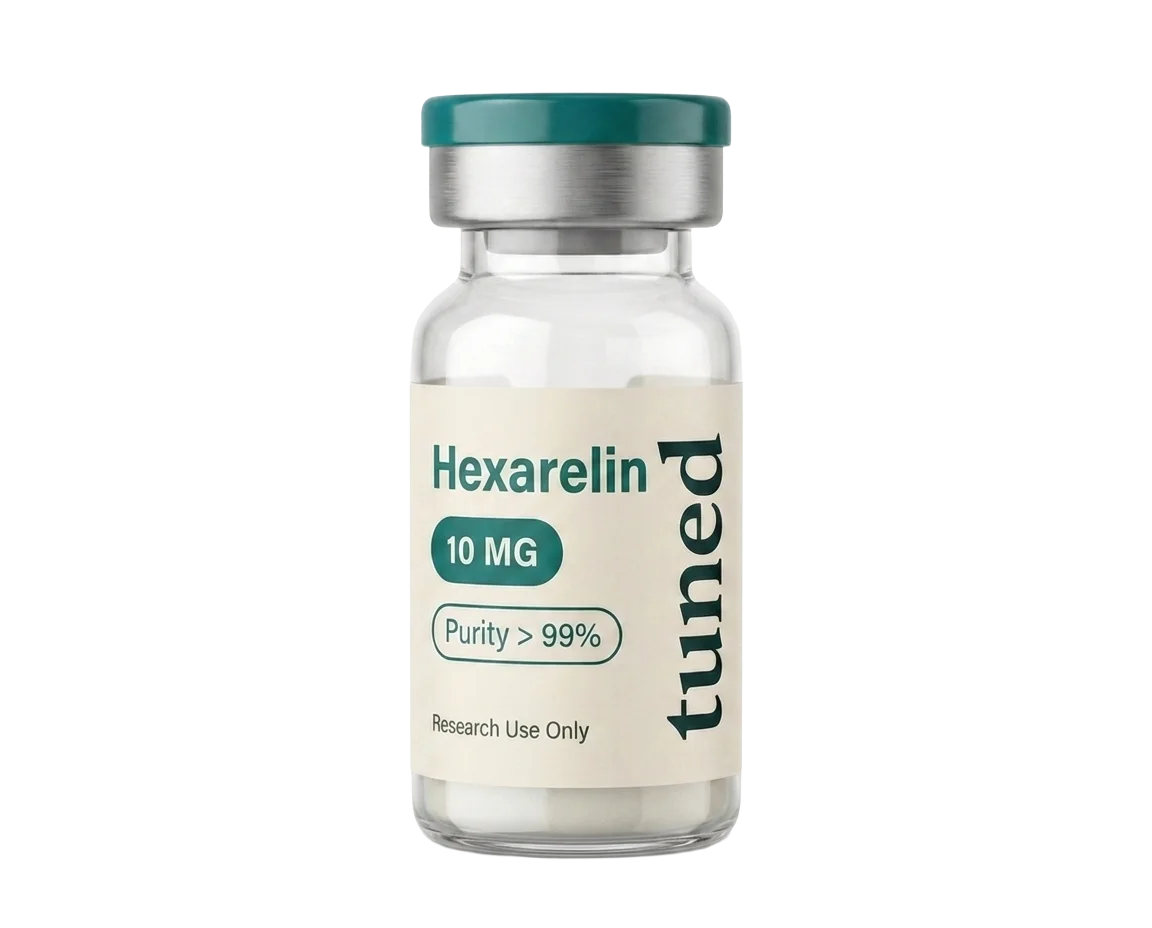
References
- Prakash A, Goa KL. Sermorelin: a review of its use in the diagnosis and treatment of children with idiopathic growth hormone deficiency. BioDrugs, 1999;12(2):139–157. PMID 18031173. (GHRH(1-29); approved diagnostic/treatment history as Geref; tolerability.)
- Corpas E, Harman SM, Piñeyro MA, et al. Growth hormone (GH)-releasing hormone-(1-29) twice daily reverses the decreased GH and insulin-like growth factor-I levels in old men. J Clin Endocrinol Metab, 1992;75(2):530–535. PMID 1379256. (Reverses age-related GH/IGF-1 decline.)
- Khorram O, Laughlin GA, Yen SS. Endocrine and metabolic effects of long-term administration of [Nle27]growth hormone-releasing hormone-(1-29)-NH2 in age-advanced men and women. J Clin Endocrinol Metab, 1997;82(5):1472–1479. PMID 9141536. (Older-adult endocrine/metabolic effects.)
- Cummings DE, Merriam GR. Age-related changes in growth hormone secretion: should the somatopause be treated? Semin Reprod Endocrinol, 1999;17(4):311–325. PMID 10851571. (Honest framing of GH decline with age.)
- Grossman A, Savage MO, Besser GM. Growth hormone releasing hormone. Clin Endocrinol Metab, 1986;15(3):607–627. PMID 2429796. (GHRH physiology.)
- Shah RB, Ahsan F. Oral delivery of proteins: progress and prognostication. Crit Rev Ther Drug Carrier Syst, 2002;19(2):135–169. PMID 12197608. (Why peptides are poorly absorbed orally.)
Sermorelin is GHRH(1-29), a GHRH-receptor agonist that raises the body's own GH and IGF-1 [1][2][5]; GHRH(1-29) reversed age-related GH/IGF-1 decline in older men [2] with broader endocrine/metabolic effects in older adults [3]. It was FDA-approved (Geref) then US-withdrawn in 2008 for commercial reasons; the research-chemical version is not pharmaceutical-grade. No controlled trial supports sermorelin for weight loss; it acts on the GH axis, not the testosterone axis. Community study protocol, "before and after," weight-loss and TRT-pairing claims are unverified. GH-axis agents are prohibited in sport by WADA. Not medical advice.
For research use only. Not for human consumption. This page summarises published research for educational purposes. It is not medical advice and is not intended to diagnose, treat, cure, or prevent any disease.